Surplus vs Refurbished Allen Bradley on eBay: What Each Condition Grade Really Means
uBuyFirst
I bought a 1769-L33ER listed as "New Sealed" on eBay for about $800 below Rockwell's list price. The box had factory tape intact. But when I opened it, the date code stamped on the unit was over six years old, and the backup battery was already dead. The part worked fine after I swapped the battery, but it was a reminder that "new" and "recently manufactured" are two completely different things in the Allen Bradley surplus market. On the flip side, I've bought professionally refurbished ControlLogix processors that arrived cleaner, better-tested, and more reliable than some "new" units I've pulled off surplus shelves. Condition grading for industrial automation parts on eBay follows different rules than consumer electronics, and understanding those rules is the difference between a smart purchase and an expensive headache. This guide breaks down every condition grade you'll encounter, where surplus parts actually come from, what refurbishment means for different product types, and how much you should expect to pay at each tier. For a broader view of buying Allen Bradley on eBay, start with our complete Allen Bradley buying guide.
The Six Condition Grades for Allen Bradley Parts on eBay
eBay's standard condition categories for Business & Industrial listings are "New," "New - Open box," "Remanufactured," and "Used." But the surplus industrial automation market has developed its own more granular vocabulary that sellers layer on top of these eBay categories. Here's what each grade actually means when you're shopping for Allen Bradley PLCs, drives, and automation components.
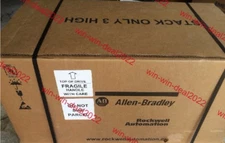
New Factory Sealed (NFS) means the part has never been removed from its original Rockwell Automation packaging, and the factory seal tape is intact. The unit has never been powered on, installed, or configured. This is the gold standard for surplus, but "sealed" does not mean "recent." A factory-sealed 1756-L71 might have a 2018 date code and have been sitting in a warehouse for eight years. The packaging might show shelf wear, yellowed labels, or faded ink. None of that affects the part inside — unless it contains electrolytic capacitors, which we'll get to. Sellers on eBay typically list these under the "New" condition with notes like "Factory Sealed Surplus" or "Sealed Surplus." Expect to pay 30-50% below Rockwell's current list price for in-production parts, sometimes more for discontinued models.
New Open Box / Surplus Packaged Opened (SPO) is an unused part in its original packaging, but the box has been opened. This usually happens because a surplus dealer opened it for visual inspection, inventory verification, or photography. The part has never been installed or powered on. Some sellers open boxes to verify the series and revision letter matches what the label says — a legitimate quality-control step. On eBay, these appear as "New - Open box" with seller notes like "Unused Surplus" or "Opened for inspection only." Pricing runs about 5-10% below factory sealed equivalents.
Surplus No Packaging (SNP) is a new, unused part without its original manufacturer packaging. This happens when parts are pulled from cancelled projects, removed from mounted-but-never-commissioned panels, or when the original box was discarded by a previous owner who planned to install the part but never did. The part itself is unused, but there's no box, no manual, and no accessories. Sellers ship these in generic anti-static packaging. Pricing is typically 40-60% below list. The lack of original packaging makes it harder to verify the part is genuinely unused, which is why the discount is steeper. Ask sellers for close-up photos of the connector pins — unused pins are shiny and unmarked, while installed-then-removed parts show insertion marks or slight oxidation.
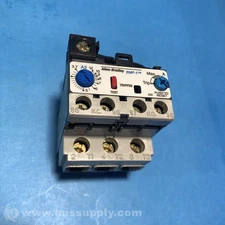
Refurbished / Tested & Refurbished (STR) means the part was previously used in a live installation, then professionally cleaned, inspected, tested, and restored to working condition. What "refurbished" includes varies enormously depending on the vendor and the product type. A reputable surplus dealer will replace known wear items — backup batteries in PLCs, electrolytic capacitors in drives, backlight assemblies in HMIs — and perform functional testing. Less scrupulous sellers might clean the exterior and call it "refurbished" without any internal work. Pricing runs 50-70% below list for current-production parts. For most system integrators buying refurbished Allen Bradley equipment, this grade represents the best value-to-risk ratio.
Used Tested means the part was pulled from a working installation and the seller has verified it powers on and passes basic functional checks. The level of testing varies — some sellers run comprehensive diagnostics, others just confirm the status LEDs come on. There's no component replacement or internal servicing. Cosmetic wear is normal: scuffed housings, label scratches, marker writing, DIN rail marks. Pricing is 55-75% below list. Always ask the seller specifically what "tested" means. "Tested" on a ControlLogix 1756 module should mean the seller loaded a test program and verified I/O functionality, not just that the power light turned green.
Used As-Is is the cheapest and riskiest grade. The part was pulled from an installation and is being sold without any testing or functionality guarantee. It might work perfectly. It might be dead. Sellers use this grade for parts pulled from decommissioned equipment where testing wasn't practical, or for parts with known defects sold for repair or scrap value. Pricing is 70-90% below list. Only buy as-is if you can test the part yourself before deploying it, or if you're buying for a repair bench. eBay still provides its 30-day Money Back Guarantee on as-is items if the listing doesn't accurately describe visible defects, but you can't return a part simply because it doesn't work.
Where Surplus Allen Bradley Parts Actually Come From
The word "surplus" makes some buyers uneasy. It sounds like leftover stock nobody wanted. The reality is far less dramatic, and understanding the supply chain removes the stigma.
Plant closures and decommissions are the single largest source. When a manufacturing facility shuts down, its entire automation infrastructure goes up for sale. A plant running Allen Bradley ControlLogix across forty machines might have hundreds of I/O modules, dozens of processors, multiple PowerFlex drives, and stacks of spare parts that were never installed. Asset recovery firms buy the entire lot, sort it, test it, and resell it. Companies like Radwell International and Classic Automation have built their entire business model around this pipeline.
System upgrades and migrations generate massive quantities of working parts. Rockwell Automation actively encourages customers to migrate from SLC 500 and PLC-5 platforms to ControlLogix and CompactLogix. Every migration creates a pile of perfectly functional SLC 500 modules that the plant no longer needs. The same pattern played out when MicroLogix was sunsetted and CompactLogix 5380 replaced earlier CompactLogix generations. These parts often have years of life left and were removed only because something newer exists.
Project overstock is the cleanest source of surplus. When a system integrator specs out a large project, they order extra units — sometimes 10-15% overage is standard for large installations. The extras sit on shelves, never installed. When the project completes, the overstock gets sold to surplus dealers. These are genuinely new, unused parts in factory packaging. The only catch is the date code might be a year or two behind current production.
Distributor excess and closeouts occur when authorized Allen Bradley distributors overstock a particular part number and need to clear inventory. This is more common with parts that get revised or superseded. A distributor sitting on fifty units of a Series A module when Series B ships may sell the older revision through surplus channels at a discount. These are legitimate factory-new parts — just not the latest revision.
The bottom line: surplus does not mean defective. The vast majority of surplus Allen Bradley parts are fully functional equipment that left the supply chain for business reasons, not quality reasons. The key is verifying the specific unit you're buying, which is where condition grading, seller evaluation, and testing discipline come in.
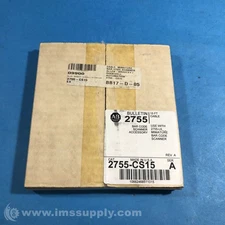
allen bradley new in box on eBay
See all →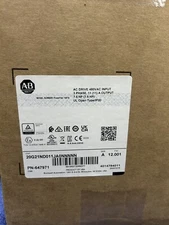


What "Refurbished" Actually Means for PLCs vs VFDs vs HMIs
This is where most buyers make their biggest mistake: treating "refurbished" as a single category. A refurbished PLC processor and a refurbished VFD drive have almost nothing in common from a reliability standpoint. The components that degrade, the work required to restore them, and the risks of buying refurbished all differ dramatically by product type.
PLCs and I/O Modules are the safest refurbished purchase. A ControlLogix processor is fundamentally a solid-state computer. There are no moving parts. The primary wear item is the backup battery (1756-BA2 for ControlLogix, CR2032 for some CompactLogix models), which has a rated shelf life of about two years and an in-service life of two to three years depending on ambient temperature. A quality refurbisher replaces the battery, cleans the backplane connector pins, verifies the status LEDs, loads a test program to exercise the processor, and confirms communication over EtherNet/IP. Newer 5069-series CompactLogix processors use flash memory and don't require a backup battery at all, making them even better candidates for the surplus market. The key question to ask about a refurbished PLC is firmware version — if your project file was built in Studio 5000 v34, you need a processor running v34-compatible firmware, and downgrading isn't always possible.
VFDs and Drives are the riskiest refurbished purchase, and paradoxically, are also where professional refurbishment adds the most value. The critical components in a PowerFlex drive are the DC bus electrolytic capacitors, the cooling fans, and the IGBTs (power transistors). Electrolytic capacitors degrade both during operation and while sitting unpowered on a shelf. The internal electrolyte slowly evaporates through the rubber seal, reducing capacitance and increasing equivalent series resistance. Industry data shows capacitors last seven to ten years in operation under normal thermal conditions. But here's what most buyers miss: capacitors sitting unpowered on a shelf also degrade. After six months to two years without power, the aluminum oxide dielectric layer begins to thin, and the capacitor needs "reforming" — a controlled, gradual voltage application — before first power-up. A "new sealed" PowerFlex 525 with a five-year-old date code may have capacitors in worse shape than a professionally refurbished unit where the caps were replaced six months ago. This is why reputable drive refurbishers like Beaver Electrical explicitly advertise that they reform the capacitors in their inventory. For VFD-specific buying guidance, see our PowerFlex VFD buying guide.
HMIs and Operator Terminals fall in the middle. A PanelView display has two primary wear points: the LCD backlight and the touchscreen overlay. CCFL backlights in older PanelView Plus models dim over time — a unit with 40,000+ hours of runtime will be noticeably dimmer than new. LED-backlit models (PanelView Plus 7 and newer) hold up much better. Touchscreen overlays develop scratches, dead spots, and calibration drift from years of operator use in factory environments. A proper refurbishment replaces the overlay film and backlight assembly, but some sellers merely clean the screen and call it refurbished. NJT Automation has documented cases of aftermarket components — non-OEM touchscreen overlays and replacement LCD panels — being installed in refurbished PanelViews and sold as original equipment. The parts work, but they may not match OEM specs for touch sensitivity or display color accuracy. For HMI-specific condition assessment, see our PanelView HMI buying guide.
Rockwell Automation's Official Remanufacturing Program is the gold standard and the only way to get a manufacturer warranty on a used part. Rockwell operates ten global ISO-certified remanufacturing facilities that use OEM-specified components, install applicable firmware updates, and provide a twelve-month warranty on the entire unit — not just the replaced parts. Remanufactured units are functionally equivalent to new. The downside is cost: Rockwell's remanufactured pricing is typically only 15-25% below new, which means the savings over buying new from an authorized distributor are modest. For many buyers, the warranty justification alone makes this worthwhile for mission-critical applications. Contact your local authorized Allen Bradley distributor or visit Rockwell Automation's repair services page to request a remanufacturing quote.
When "New Sealed" Is Not What It Seems
The phrase "New Factory Sealed" carries enormous weight in the Allen Bradley surplus market because it implies the part is unused, untouched, and as close to buying from Rockwell as possible. But experienced surplus buyers know that this designation needs scrutiny, not trust. Our counterfeit detection guide covers the most egregious fakes, but there are subtler problems with "new sealed" listings that don't involve counterfeits at all.
Resealed boxes are disturbingly common. A used part gets cleaned, placed back in an original or similar box, and resealed with factory-style tape that's available from packaging suppliers. The listing says "New Sealed" because the box is sealed. The part inside has 20,000 hours of runtime. This is outright fraud, and it's one reason why the seller's reputation matters more than the listing condition for Allen Bradley new sealed parts. Legitimate surplus dealers with thousands of feedback and years of eBay history don't risk their accounts on resealing schemes. Unknown sellers with low feedback counts and overseas registration are the primary offenders.
Date codes and shelf life are the second issue. Every Allen Bradley product has a date code — typically a four-character code indicating the year and week of manufacture (e.g., "2019/35" means week 35 of 2019). A "new sealed" part manufactured in 2017 is genuinely new in the sense that it was never installed or used. But it's been sitting in a box for nearly a decade. For solid-state parts like PLC processors and I/O modules, this is usually not a problem — the semiconductor components don't degrade on the shelf. For parts with electrolytic capacitors (VFDs, power supplies, some communication modules), a date code older than five years is a yellow flag. The capacitors may need reforming before the unit is safe to power on at full voltage. For parts with batteries (PLC processors with SRAM), the battery may be dead or nearly depleted, which means any program stored in SRAM is gone. The battery itself is a $10-20 replacement, but some buyers are caught off-guard when their "new" processor arrives with a BAT fault.
Firmware and series mismatches are the third hidden issue. Rockwell continuously revises their hardware, and the series letter (A, B, C, etc.) on a module determines its capabilities and firmware compatibility. A "new sealed" 1769-L33ER Series A is not interchangeable with a Series B in every application — Series B may support higher firmware versions needed for newer Studio 5000 features. Some surplus listings don't specify the series or show it in photos but bury it in small print. Always confirm the series letter, the firmware version, and the revision number before purchasing. If the listing doesn't show the product label clearly, ask the seller for a photo of it.
Rockwell's own position on unauthorized "new" parts is worth noting. Their Smart Sourcing publication (PN-SP010) explicitly warns that "'new' can be a relative term when product is being purchased from an unauthorized source" and that a factory seal "does not mean that it is the latest series or revision of that product." Rockwell further notes that products purchased through unauthorized channels — which includes essentially every eBay seller — do not carry the Rockwell Automation warranty, even if the part is genuinely new and sealed.
refurbished allen bradley plc on eBay
See all →


Price-to-Condition: What Each Grade Should Cost You
Pricing for surplus Allen Bradley parts follows a predictable pattern relative to Rockwell's current list price, but with one critical exception that catches new buyers off guard. Here are the general ranges I've observed across hundreds of eBay transactions:
New Factory Sealed: 30-50% below list price for current-production parts. A ControlLogix 1756-L73 that lists for $5,800 from Rockwell typically sells sealed-surplus on eBay for $2,900-$4,000. Higher-volume modules like 1756-IF16 analog inputs show even steeper discounts because more surplus is available. Lower-demand specialty modules hold closer to list.
New Open Box: 35-55% below list. Slightly deeper discount than sealed because the opened packaging creates buyer hesitation, even though the part itself is identical. Use this to your advantage — if a surplus dealer opened the box for inspection and photographed the actual unit, you're getting better verification than a sealed box while paying less.
Refurbished with Warranty: 50-70% below list. This is the value sweet spot for most integrators. A refurbished 1769-L33ER CompactLogix processor from a dealer like Classic Automation (99.9% positive, 11,000+ items sold) comes with a warranty that covers you the same way as buying new from the dealer's perspective. You're paying for the part and the dealer's testing and guarantee.
Used Tested: 55-75% below list. You get a working part and the seller's assurance that it was tested, but no component replacement and a more limited warranty — often 30-90 days compared to the one to two years that refurbishment dealers offer.
Used As-Is: 70-90% below list. The bargain bin. If you have test equipment and the ability to troubleshoot, as-is parts can be an excellent value. A used-as-is PowerFlex 525 that needs a $150 capacitor kit and two hours of bench time might cost you $200 total versus $2,000+ for a sealed unit.
The Obsolescence Inversion: Everything above assumes the part is currently in production. For discontinued parts — PLC-5, SLC 500, older PanelView models, legacy Flex I/O — the pricing model can invert completely. A used-tested PLC-5/40 processor might sell for more than its original list price because demand from plants that still run PLC-5 far exceeds the dwindling supply. Obsolete parts are a seller's market, and the normal condition discounts don't apply. A factory-sealed SLC 500 processor can command a premium precisely because sealed units are almost impossible to find. Check eBay's completed/sold listings to see what specific part numbers actually sold for recently — the current active listings often have aspirational pricing that doesn't reflect real transactions.
Warranty and Return Protection by Condition Grade
Warranty coverage for surplus Allen Bradley parts comes from three possible sources, and understanding which applies to your purchase determines your actual risk exposure.
Rockwell Automation's manufacturer warranty only applies to products purchased through authorized channels. The standard warranty for Allen Bradley industrial controls hardware is typically twelve months from date of purchase or eighteen months from date of manufacture, whichever comes first. If you buy from any eBay seller — even if the part is genuinely new and sealed — Rockwell will not honor a warranty claim. This is stated explicitly in their terms. The only exception is Rockwell's own Remanufacturing and Exchange Services program, which provides a twelve-month warranty on remanufactured units purchased directly through Rockwell or an authorized distributor.
Seller warranties from surplus dealers are your primary protection on eBay purchases. The coverage varies enormously. The top-tier surplus dealers on eBay offer warranties that rival or exceed what you'd get from an authorized distributor. Industrial Automation Co. provides a two-year warranty on all products regardless of condition. Classic Automation, Texnite, and Device Surplus similarly offer one to two year warranties. Smaller individual sellers may offer 30-90 days or nothing at all. When comparing two listings for the same CompactLogix 1769 module, always factor the warranty into the price. A refurbished unit at $400 with a two-year warranty is a better deal than a used-tested unit at $350 with no warranty — the $50 premium buys you insurance against a failure that could cost thousands in downtime.
eBay's Money Back Guarantee is your baseline protection on every transaction. You have 30 days from delivery to open a return request if the item isn't as described. This covers all condition grades, including "Used As-Is" — if the seller's listing says "powers on but untested for full functionality" and the unit doesn't power on at all, that's a valid "item not as described" claim. The guarantee covers your purchase price plus original shipping. One important nuance: eBay's guarantee overrides any seller return policy. Even if a listing says "no returns," you can still file an INAD claim if the item doesn't match the listing description. For parts that pass initial testing but fail weeks later, you'll be relying on the seller's warranty, not eBay's guarantee — which is why the seller warranty matters.
Best Offer negotiations and warranty terms deserve a note. Many surplus Allen Bradley listings accept Best Offer. When negotiating price, don't forget to ask about warranty terms in your offer message. Some sellers will extend their standard warranty by 30-60 days in exchange for accepting a higher price than your initial offer. A few extra dollars for a longer warranty is almost always worth it on parts going into production equipment. Include a message like "Will you include a 1-year warranty at $X?" — the worst they can say is no, and you've lost nothing by asking.
used allen bradley tested on eBay
See all →

How to Evaluate Surplus Allen Bradley Sellers on eBay
The seller matters more than the condition grade. A "New Sealed" listing from an unverified overseas seller is riskier than a "Used Tested" listing from a domestic surplus dealer with years of transaction history. Here's how to separate the legitimate dealers from the problems.
Transaction volume and feedback history are your first filters. The established Allen Bradley surplus dealers on eBay have massive transaction counts: Balti PLC Hardware has moved over 228,000 items at 100% positive feedback. Hummingbird Automation has sold 41,000+ items at 100% positive. PLC-Mall in South Texas has 18,000+ items sold at 100% positive. Classic Automation has 11,000+ items at 99.9% positive. M&M Industrial Surplus has 16,000+ items at 100% positive. These are businesses that have been selling industrial automation parts on eBay for a decade or more. They test their inventory, they honor their warranties, and they have too much to lose by misrepresenting condition. For any Allen Bradley purchase over $200, I won't buy from a seller with fewer than 500 total feedback or below 98% positive.
Seller location verification is where uBuyFirst provides a critical advantage. One of the most common deceptive practices in the industrial surplus market involves sellers who list their item location as a US city but actually ship from overseas — typically China or Southeast Asia. NJT Automation has documented this pattern extensively: the listing says "Ships from Pharr, Texas" or "Located in New Jersey," but the part actually ships from Shenzhen with a two to three week delivery time. When the part arrives, the serial numbers may be missing, the packaging may be aftermarket, and the internal components may not match OEM specifications. uBuyFirst shows the seller's registered country, not just the item location field — which eBay lets sellers set to anything. If a seller claims to be in Texas but their account country is registered overseas, that's a red flag you can see on uBuyFirst before you ever place a bid.
Return policies and warranty documentation tell you how confident a seller is in their product. A surplus dealer offering a two-year warranty and 30-day free returns on a refurbished ControlLogix processor is putting money behind their testing. A seller offering no returns and no warranty on a "New Sealed" listing is telling you they don't want to deal with problems — and that's a problem. Always check the return policy before purchasing, and save screenshots of the listing description and the seller's warranty terms. If a warranty claim comes up months later, you'll want documentation of what was promised.
Photos of the actual unit are non-negotiable for any listing over $100. Stock photos of a clean product on a white background are worthless — you need to see the specific unit you're buying. Look for the product label showing the catalog number, series letter, revision, date code, and serial number. For "New Sealed" listings, the sealed box should be photographed from multiple angles showing intact factory tape. For used or refurbished listings, connector pins, status LED area, and any cosmetic wear should be visible. If a seller won't provide photos of the actual unit, move on. There's no shortage of legitimate surplus dealers who will.
Ready to start sourcing? Browse Allen Bradley surplus parts on uBuyFirst to filter by seller country, compare pricing across condition grades, and set up real-time alerts for specific part numbers. The surplus market moves fast — a well-priced sealed ControlLogix processor from a reputable US seller rarely lasts more than a few days. Set your alerts and let the deals come to you.