Counterfeit Allen Bradley Parts on eBay: How to Spot Fakes Before You Buy
uBuyFirst
I once received a 1769-IF4 analog input module that looked flawless. Factory-sealed box, clean label, correct catalog number. It went into a panel for a pharmaceutical packaging line, and within 72 hours the client was rejecting product batches because the analog scaling was drifting outside tolerance. We pulled the module, put a known-good unit in its place, and the problem vanished. When I inspected the suspect module closely, the serial number on the label didn't match what RSLinx reported internally. The label font spacing was subtly wrong. The QR code on the box scanned to nothing. I'd installed a counterfeit in a production environment, and it cost my client two days of downtime and thousands in scrapped product. That experience changed how I source every Allen Bradley part from eBay. This guide is everything I've learned since then about detecting fakes before they reach your panel.
The Scale of the Counterfeit Allen Bradley Problem
Counterfeit industrial automation components are not a fringe issue. The global electronics sector loses over $100 billion annually to counterfeit parts, according to industry data aggregated by Dataquest. Within the industrial automation niche specifically, a 2023 UL Industrial Cybersecurity Report found that 18% of PLCs sourced from non-authorized distributors showed evidence of cloned firmware or re-marked EEPROMs. In 2023 alone, Rockwell Automation issued 14 public warnings about counterfeit 1769-IF4 analog input modules being sold on major online marketplaces. Those fake modules caused product batch rejections at pharmaceutical facilities where analog input accuracy is a regulatory requirement.
The problem has gotten serious enough to attract government attention. In January 2026, the Vermont Department of Environmental Conservation issued a formal advisory to water and wastewater system operators about counterfeit Rockwell PLCs infiltrating critical infrastructure. The advisory cited a New Hampshire case where a routine firmware update failed, Rockwell's serial number verification flagged the controller as counterfeit, and the utility had no certificate of authenticity or chain of custody to fall back on. The device was destroyed before anyone could perform forensics on it. That's a PLC controlling drinking water treatment that turned out to be a fake.
The financial exposure extends beyond the cost of the part itself. Rockwell Automation's warranty covers only products purchased through authorized sources. A counterfeit ControlLogix processor that fails in service gives you zero warranty recourse, zero firmware license rights, and a potential cybersecurity vulnerability in your control network. Rockwell's own Smart Sourcing publication warns that counterfeit and modified products present "significant opportunity for bad actors to infiltrate industrial networks and control systems." In high-mix production environments, unplanned downtime from a failed PLC costs $20,000 to $50,000 per hour. A $200 savings on a gray market module can generate six figures in losses when it malfunctions. ERAI, the industry's leading counterfeit electronics database, tracks reported counterfeits across all sectors and has documented a steady increase in industrial automation part reports since the supply chain disruptions of 2021-2022, when extended lead times drove desperate buyers to unvetted sources.
Visual Tells That Separate Genuine from Fake
The single most reliable first-pass detection method is a careful visual inspection. Counterfeiters can approximate the look of Allen Bradley parts, but they consistently fail on details that Rockwell's manufacturing process gets right every time. Once you know what to look for, a two-minute inspection catches the majority of fakes.
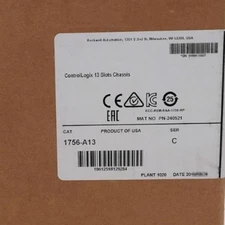
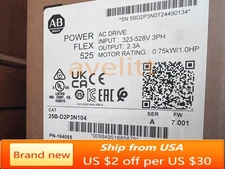
Label quality is the first tell. Genuine Allen Bradley labels are printed with high-precision industrial printers. Text is razor-sharp. Colors are consistent. Font spacing is exact. Counterfeit labels, by contrast, are reproduced from photographs or scans of genuine labels, and the reproduction introduces subtle degradation. Look for slightly blurry text, inconsistent spacing between characters, colors that are a shade too light or too saturated, and any misalignment between the printed text and the label borders. Misspellings are surprisingly common: documented examples include "Allen Bardley" (missing the second 'l' in Bradley), "ControLogix" (missing the lowercase 'l' before the capital L), and incorrect product description text. One PLCtalk forum user identified a fake 1756-ENBT by noticing the label used "MAT NO" followed by the bulletin number instead of the correct "PN-xxxxxx" format that genuine labels use.
Rockwell's guilloche security labels are your best friend. Since 2021, Rockwell has progressively rolled out security labels across major product lines. These labels use a guilloche pattern — uniquely patterned overlapping lines with varying degrees of thickness, color tints, and distortions that are extremely difficult to reproduce. They also feature black-on-black printing that looks raised to the touch but appears visually flattened when photocopied or scanned. Products that should carry these security labels include: all 1756 ControlLogix modules (plant code 1020, manufactured after February 2021), 1769 CompactLogix products (plant code 2005642, after March 2022), 1794 Flex I/O modules (plant code 2005642, after January 2022), 2711P and 2715P PanelView units (plant code 1020, after August 2023), and 20F and 20G PowerFlex 753 and 755 drives (plant code 1100, after August 2023). If you receive a module manufactured after these dates and it lacks the guilloche security label, treat it as suspect. Your four-digit or seven-digit plant code is typically found to the left of the country-of-origin statement on the product label.
Physical build quality reveals the rest. Genuine Allen Bradley hardware uses high-grade plastics with precise, clean molding. Logos and text molded into the housing are sharp, never blurred or uneven. Run your finger along the housing seams — genuine parts have tight, consistent seam lines. Counterfeits often show visible flash (excess plastic at mold lines), slightly rough surface textures, or colors that don't quite match Rockwell's standard gray. Weight is an underappreciated tell: a genuine 1756-L83E processor weighs approximately 0.35 kg. A deviation of more than 5% from the datasheet weight often points to cheaper internal components. Terminal blocks on genuine modules use high-grade copper or nickel-plated alloys that grip wires firmly at the recommended torque setting. Counterfeit terminal blocks frequently use softer metals that strip under normal torque. If you can inspect the internals, look for official 'Allen-Bradley' or Rockwell Automation markings silk-screened directly onto the PCB — counterfeits rarely replicate these internal markings.
allen bradley genuine sealed on eBay
See all →
Seller Red Flags That Scream Counterfeit
Before you ever inspect a physical part, you can eliminate the worst counterfeits by reading the eBay listing carefully. Fraudulent sellers follow predictable patterns, and once you've seen them, they become impossible to miss.
The price is the loudest signal. If a CompactLogix processor that sells through authorized distributors for $2,400 is listed "brand new, factory sealed" on eBay for $95, it is not a deal. It is a counterfeit. The general rule: if the listing price is more than 40-60% below the normal market value for that catalog number, treat it as a high-alert item. Run a completed/sold listings search on eBay for the same part number to establish what genuine units actually sell for. That three-minute check gives you a baseline that exposes predatory pricing instantly.
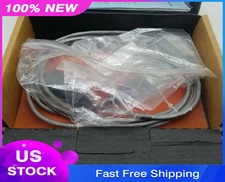
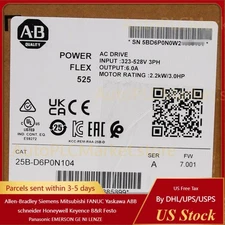
Watch for weaponized keywords. Sellers of counterfeit Allen Bradley parts use a specific vocabulary designed to build false confidence: "USA SHIP," "Sealed Goods," "GENUINE PRODUCT," "100% Tested," "100% Quality Approval," "USA SELLER," "Free Tax," "1PC New," and "US Stock." Legitimate surplus dealers don't need to plaster their listings with these phrases because their feedback history and product photos speak for themselves. The more a listing protests its authenticity, the less authentic it tends to be. A genuine surplus dealer describes the part condition, provides the catalog number and series, shows multiple clear photos of the actual unit, and includes the serial number.
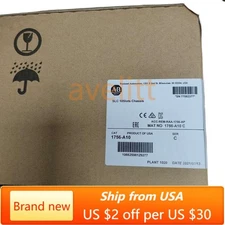
Photo quality tells the story. Genuine sellers photograph the actual part they're selling — all sides, the data plate, the serial label, the box, and any imperfections. Counterfeiting operations use stock photos pulled from Rockwell's website or copied from other legitimate listings. If you see the same studio-quality product shot across multiple different sellers, or if the photos show only one or two angles without a serial plate visible, walk away. Blurred, scratched-off, or stickered-over serial numbers are among the most consistent tells. As one established eBay surplus dealer put it: they specifically encrypt serial numbers in their photos to prevent hijacking and duplication by the Asian counterfeit market — but they always show that the serial number exists and is intact.
Seller account age and feedback matter. A brand-new eBay account with 200 Allen Bradley PLCs in stock and zero feedback history is almost certainly a front. Check the seller's feedback profile: click their user ID, look at the account creation date, and read the feedback left by other buyers. A reliable surplus dealer has years of consistent sales history specifically in industrial automation. Sudden pivots — an account that sold phone accessories for three years and now lists $50,000 in ControlLogix inventory — are just as suspicious as brand-new accounts.
"New Without Box" on discontinued parts is a dead giveaway. If a seller lists a "new" Series B module that Rockwell stopped manufacturing a decade ago, the part is not new. It has been pulled from a decommissioned panel, cleaned with solvent, and relabeled. Zoom in on the DIN rail feet, the screw terminals, and any date codes. These are the areas where cleaning and relabeling leave traces. For a deeper understanding of how legitimate surplus differs from suspect "new" claims, see the Allen Bradley surplus and refurbished guide.
The Item Location Trick and How Seller Country Cuts Through It
This is the single most effective counterfeit avoidance technique I've found, and it addresses the biggest vulnerability in eBay's marketplace for industrial parts.
Here's the problem: eBay allows sellers to set their "item location" to whatever they want. A seller physically located in Shenzhen, China, can create an eBay account with a US address and list every item as "Ships from New Jersey." When you filter eBay search results by "US Only" under item location, these fake-location listings pass right through the filter. You think you're buying from a domestic surplus dealer. Your tracking number eventually reveals the package is coming from Hong Kong or Guangdong Province. This isn't speculation — it's one of the most-discussed issues on eBay's own community forums, with thousands of buyer complaints about overseas sellers misrepresenting their location. Multiple threads document the exact pattern: the listing says "Located in: New York, New York," and the tracking shows origin scan in Shenzhen.
For industrial automation buyers, this is more than an annoyance — it's a counterfeit pipeline. The counterfeit Allen Bradley market is overwhelmingly supplied from East Asia. Sellers based in China and Hong Kong account for the vast majority of fake and hybrid AB parts on eBay, according to industry dealers who have tracked the pattern for years. When a listing claims US location but the seller is actually overseas, the probability that you're looking at a counterfeit or misrepresented part increases dramatically.
The workaround I use: uBuyFirst shows the seller's registered country, not the self-reported item location. When eBay reveals only where the seller claims the item is located, uBuyFirst pulls the seller's actual registered country from their account data. This is the country the seller registered with when they created their eBay account — and while it's not impossible to fake, it's far harder to misrepresent than item location. When I set up a search alert on uBuyFirst for a 1769-IF8 analog module, I can see instantly which results come from sellers registered in the United States, Canada, or the UK versus sellers registered in China or Hong Kong. I don't have to click into each listing, hunt for clues in the description, or wait for a tracking number to discover the truth. The seller country is right there in the alert results.
My workflow for any Allen Bradley part purchase starts here: I create a uBuyFirst alert for the catalog number I need — say, 1756-EN2T. When results come in, I immediately check the seller country. If the seller is registered outside North America or Western Europe, I skip the listing entirely unless I have a specific reason to trust that seller. This single filter eliminates the majority of counterfeit listings before I spend a second evaluating photos, prices, or descriptions. It's the fastest first pass available, and it has saved me from questionable listings more times than I can count. For a complete overview of searching and buying Allen Bradley parts on eBay, see the Allen Bradley buying guide.
The Most Commonly Counterfeited Allen Bradley Parts
Not all Allen Bradley products attract equal counterfeiting attention. Counterfeiters target parts that combine high unit value, strong demand, and supply constraints. Understanding which product lines are most targeted lets you calibrate your inspection intensity — a $30 terminal block requires less scrutiny than a $2,000 processor that sits on every counterfeiter's production list.
1769 CompactLogix modules lead the list. The 1769-IF4 and 1769-IF8 analog input modules are the most publicly documented counterfeit targets, with Rockwell issuing 14 separate warnings about fakes in 2023 alone. The 1769-L33ER and other CompactLogix processors are close behind. These parts sit in the price sweet spot for counterfeiters: expensive enough to justify the effort ($500-$2,500 for processors), common enough to find ready buyers, and similar enough across series revisions that visual differences between genuine and fake aren't immediately obvious.
1756 ControlLogix processors and I/O are high-value targets. The 1756-L83E and similar ControlLogix processors retail for $5,000+ through authorized channels. At those prices, even a crude counterfeit sold at a "discount" generates significant profit. 1756-OB32 output modules and 1756-ENBT EtherNet/IP modules have both appeared in documented counterfeit cases with recreated security seals and labels that would pass a casual glance. The PLCtalk forums have documented specific instances of 1756-ENBT modules with misspelled description text and incorrect label formatting.
Micro800 series PLCs have a documented counterfeit problem. The Micro820 and Micro850 are popular with smaller integrators and educational users — exactly the buyers most likely to source from eBay. A well-documented Reddit case from 2022 showed a buyer who received two Micro820 units from the same eBay seller with identical serial numbers. The barcodes on the boxes didn't scan. The serial number reported by RSLinx didn't match the printed label. Rockwell's warranty tool confirmed the printed serial belonged to a different catalog number entirely. When an authorized distributor checked the serial, it traced to an old, different product. These units functioned — they accepted firmware updates and connected to CCW — but they were confirmed counterfeits.
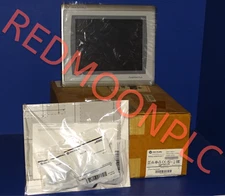
PanelView HMIs are the hybrid fake capital. PanelView Plus units are among the most commonly "hybridized" — used circuit boards pulled from working units get installed in brand-new aftermarket plastic housings with reproduction overlays and bezels. NJT Automation documented multiple 2026 examples of PanelView units listed as "new" on eBay that combined genuine internals with aftermarket exteriors. These hybrid fakes are particularly difficult to detect from listing photos alone because the functional components are real. The aftermarket housing and overlay are the only fake elements, and they're designed to look identical to OEM parts.
PowerFlex drives, safety relays, and contactors round out the list. PowerFlex VFDs carry enough per-unit value to attract counterfeiters, especially the 525 and 755 series. Safety relays and safety controllers present the most dangerous counterfeit scenario — a fake safety component that fails to perform its safety function can directly cause injury or death. If you're sourcing safety-rated Allen Bradley components from secondary markets, the inspection and verification bar should be at its absolute highest. For specific guidance on safety component sourcing, see the Allen Bradley safety relays guide.
allen bradley original new on eBay
See all →

How to Verify Authenticity After You Receive the Part
Even with careful seller vetting, every Allen Bradley part purchased outside authorized channels deserves a verification pass before it goes into a panel. I run every eBay-sourced module through a checklist that takes about 15 minutes and has caught fakes that survived initial listing-level screening.
Step 1: Physical inspection (first 5 minutes). Before you connect anything, examine the part with fresh eyes. Check the label for every tell described earlier — font consistency, color accuracy, guilloche security label presence, QR code scannability. Weigh the module on a precision scale and compare to the published datasheet weight. Inspect terminal blocks for metal quality. Run your fingers along housing seams checking for flash, roughness, or uneven mold lines. Look at the DIN rail clip: genuine clips have a satisfying, precise snap. Cheap reproductions feel loose or require excessive force. Photograph everything — front, back, sides, label, serial number, barcode — before proceeding. If you receive a counterfeit, these photos become your evidence for eBay claims and reporting.
Step 2: Serial number verification. Connect the module to RSLinx or Studio 5000 and read the internal serial number. Compare it to the serial printed on the label. On genuine Allen Bradley products, these match. On counterfeits, they frequently don't — the label may show a short or truncated serial, or an entirely different number than what the module reports electronically. If you have access to Rockwell's warranty verification tool (available through authorized distributor accounts), enter the serial number. The tool will confirm whether that serial is valid, what catalog number it was assigned to, and whether it's still within warranty. In the documented Micro820 case, the warranty tool revealed that the printed serial was tied to a completely different product — an immediate confirmation of counterfeit status.
Step 3: Firmware update test. This is the single most decisive test available. Attempt a firmware update through Studio 5000 Logix Designer or the appropriate Rockwell configuration tool. Genuine modules accept official firmware updates without issues. Counterfeits frequently refuse or fail firmware updates, present unsigned or altered firmware, or show identity errors during the process. The Vermont DEC advisory specifically notes that "counterfeits frequently refuse or fail legitimate OEM firmware updates." Rockwell has embedded counterfeit-detection logic into recent firmware versions — V34 and later can flag or even disable processors that don't pass authenticity checks. If your module bricks during a firmware update, you've found your answer. This is also why you never install an unverified module directly into a production system. Test it on a bench first.
Step 4: Functional validation. If the module passes the first three steps, run it through a functional test on a bench panel before deploying to production. For I/O modules, verify that input scaling and output accuracy match the published specifications. For processors, load a test program and confirm scan times, memory allocation, and communication performance match the datasheet. Counterfeit modules may function at a basic level but fail under load, exhibit drift over time, or behave unpredictably when pushed to their rated specifications. The 1769-IF4 counterfeits that caused pharmaceutical batch rejections worked fine during initial testing — the analog drift only appeared after hours of continuous operation.
What to Do If You Receive a Counterfeit
If your inspection reveals a counterfeit or suspect counterfeit Allen Bradley part, resist the instinct to just return it and move on. Your actions in the first 48 hours determine whether you recover your money and whether the seller continues defrauding other buyers.
Do not install the part. This seems obvious, but under production pressure, it's tempting to use a suspect module "temporarily" while you source a replacement. Don't. A counterfeit module in a production system is an unquantified risk — it may introduce cybersecurity vulnerabilities, fail unpredictably under load, or cause equipment damage downstream. The liability exposure alone isn't worth it.
Document everything immediately. Before contacting the seller, photograph the part from every angle. Screenshot the original listing (before the seller modifies or deletes it), including the item description, seller profile, and price. Save all messages exchanged with the seller. If you performed any electronic verification (RSLinx serial mismatch, firmware update failure), document the results with screenshots. This evidence package serves you through every step that follows.
File an eBay "Item Not as Described" case. You have 30 days from delivery to open a Money Back Guarantee claim. Select "Doesn't match description or photos" and upload your documentation. eBay overwhelmingly sides with buyers in SNAD cases, especially when the buyer provides clear evidence of counterfeit or misrepresented goods. The seller has 3 business days to respond. If they don't resolve the issue, escalate to eBay. If the listing misrepresented the item location (claimed US but shipped from overseas), report that separately as an item location policy violation.
Report to Rockwell Automation. Contact Rockwell's Brand Protection team at graymarket@ra.rockwell.com with photos, the seller's information, and details of the counterfeit indicators you found. Rockwell actively pursues counterfeiters and unauthorized resellers, and your report contributes to enforcement actions that protect the broader market. They can also help confirm whether a suspect serial number is genuine.
Report to ERAI. File a counterfeit part report at reportparts@erai.com. ERAI is the industry's central database for counterfeit electronic component reports, used by organizations across aerospace, defense, medical, and industrial sectors. Your report is anonymous and helps other buyers avoid the same seller and the same counterfeit part numbers. ERAI membership is not required to submit a report.
Credit card chargeback as a last resort. If eBay's process fails — which occasionally happens, particularly with sophisticated sellers who manipulate tracking — your credit card issuer's dispute process operates independently. Most cards allow chargebacks within 60-120 days of the transaction. Do not file a chargeback while an eBay case is still open, as eBay may suspend your buyer protections for future transactions if you pursue both simultaneously.
allen bradley factory sealed on eBay
See all →


Building a Trusted Seller Network for Allen Bradley Parts
The endgame for any system integrator or reseller who buys Allen Bradley parts on eBay is not just avoiding counterfeits on individual transactions — it's building a short list of sellers you trust repeatedly. Once you've verified a seller through multiple successful purchases, the inspection burden drops dramatically and your sourcing speed increases.
Look for feedback depth in industrial automation specifically. A seller with 5,000 positive feedback from selling consumer electronics tells you nothing about their Allen Bradley sourcing. You want sellers with hundreds of transactions specifically in the Business & Industrial category, with buyer feedback that mentions specific part numbers, accurate descriptions, and proper packaging. Established surplus dealers like those with 10+ years on eBay and consistent industrial inventory are the core of your trusted network.
Communication quality is a trust signal. Before your first purchase from a new seller, message them with a specific technical question — ask about the series revision, the firmware version loaded on a processor, or whether they can provide a photo of the data plate with the serial visible. Legitimate surplus professionals answer quickly and specifically. They know catalog numbers, they understand series differences, and they'll tell you honestly when a part shows signs of prior use. Evasive responses, broken English combined with a claimed US location, or generic answers that don't address your actual question are all reasons to look elsewhere.
Test with lower-risk purchases first. Don't make your first purchase from a new seller a $3,000 ControlLogix processor. Start with a $50-100 I/O module or communication adapter. Run it through your full verification checklist. If it passes, buy again. Build the relationship incrementally. Reliable surplus dealers appreciate repeat business and will often give priority to established customers when high-demand parts come in.
Use uBuyFirst alerts to monitor your trusted sellers' inventory. Once you have a working list of verified sellers, set up uBuyFirst alerts for the catalog numbers you need most frequently. When a matching listing appears from a seller in a trusted country, you get notified immediately — before the part sells to someone else. In the Allen Bradley surplus market, desirable parts at fair prices sell within hours. Having a monitoring system that filters by seller country and notifies you in real time turns you from a buyer who reacts to inventory into one who catches it as it appears. For a complete strategy on buying Allen Bradley parts across all product lines, including PLC-specific catalog number decoding and pricing benchmarks, see the Allen Bradley PLC buying guide.
The counterfeit Allen Bradley market is real, it's growing, and it targets exactly the kind of buyers who shop eBay for surplus industrial parts. But it's also beatable. A disciplined workflow — seller country verification first, listing-level red flag screening second, physical and electronic inspection on receipt third — catches the overwhelming majority of fakes before they ever reach your panel. Build the habit, build your seller list, and the secondary market becomes a reliable sourcing channel instead of a liability.