Vintage Watch Servicing Costs: What eBay Buyers Must Budget Before Buying
uBuyFirst
I once bought a 1960s Omega Seamaster on eBay for $620. Clean dial, decent photos, seller said it was "running well." When it arrived, it was running — about two minutes fast per day, with a second hand that stuttered every few beats. I took it to a watchmaker who quoted me $850 for a full service: dried lubricants, worn mainspring, gaskets shot. The total vintage watch service cost pushed my "great deal" past $1,470 — right into the territory where I could have bought one already serviced. That $620 Seamaster taught me the most expensive lesson in vintage watch collecting: the purchase price is never the full price. Every watch you find on eBay has a hidden second price tag, and if you do not factor it in before you bid, you are not getting a deal. You are getting a bill.
What a Full Vintage Watch Service Actually Involves
Understanding why vintage watch servicing costs what it does starts with knowing what actually happens during a proper overhaul. This is not a battery swap or a quick polish — it is a multi-day process involving specialized tools, training, and materials.
A complete service begins with full disassembly of the movement. A typical mechanical watch movement has 100 to 300 individual components. The watchmaker removes every wheel, spring, jewel, and screw. Each part goes through an ultrasonic cleaning cycle using specialized solutions to dissolve decades of dried lubricant and microscopic debris. After cleaning, the watchmaker inspects every component under magnification for signs of wear, corrosion, or fatigue. Worn parts — mainsprings, click springs, gaskets, winding stems — get replaced. The movement is then reassembled using manufacturer-recommended lubricants applied in precise quantities to specific points. Modern synthetic oils last longer than the petroleum-based lubricants used when your vintage watch was built, which is one reason a freshly serviced vintage piece can run longer between services than it did originally.
After reassembly, the watchmaker electronically regulates the movement on a timegrapher, testing in multiple positions — dial up, dial down, crown up, crown down — to ensure consistent timekeeping. The case and bracelet get ultrasonic cleaning, and the watchmaker replaces gaskets to restore whatever water resistance the case design allows. Finally, the completed watch sits on a winder for several days of observation before it is returned. This entire process takes two to six weeks depending on the watchmaker's backlog and parts availability. For vintage pieces with discontinued movements, sourcing a single part can add months.
What Rolex, Omega, and Other Brands Charge for Service
If you are shopping for vintage Rolex watches on eBay, the service cost question is unavoidable. Rolex Service Centers (RSC) charge $800 to $1,000 for a standard overhaul on simpler models like the Oyster Perpetual or Datejust. A Submariner runs $800 to $1,100 base. A Daytona chronograph starts at $1,300 to $1,600, climbing past $2,500 once parts replacements are factored in. These figures cover the movement overhaul only — crystal replacement, bezel work, and bracelet repairs are quoted separately and can add $300 to $1,500 to the total. RSC turnaround averages four to eight weeks, and the work comes with a two-year international service warranty.
Here is the catch that every vintage Rolex buyer must understand: Rolex services with a philosophy of renewal, not preservation. Their stated policy is to replace any component that no longer meets current "functional and aesthetic specifications." For modern watches, that is fine. For vintage pieces, it can be devastating. A 1960s Submariner with original tritium lume, a softly faded "tropical" dial, and period-correct hands is worth significantly more than the same watch with a factory-fresh service dial and modern SuperLuminova hands. But if you send that watch to RSC, they may replace the dial, hands, and crystal without asking — and they will not return the original parts. One collector documented on Monochrome Watches how RSC quoted over $4,000 for a 1980s Datejust, including mandatory replacement of the dial, hands, crystal, bezel, and bracelet. An independent watchmaker serviced the movement and replaced the crystal for roughly $1,000, preserving everything that gave the watch its character and value.
Omega's official service pricing is more transparent. Their published US rates for a complete service on a non-chronograph mechanical watch in non-precious metal start at $800. A mechanical chronograph like the Speedmaster Professional starts at $1,000. Precious metal cases add $100 to $200. Omega's service price includes crown, pushers, non-sapphire crystal, gaskets, and polishing. Sapphire crystal, bezel, case-back, dial, and bracelet work costs extra. Omega recommends service every five to eight years and provides a 24-month warranty. Reports on Reddit's r/OmegaWatches indicated a roughly 20% price increase in January 2025, pushing real-world costs even higher than the published rates.
For more affordable vintage brands — Seiko automatics, Citizens, Tissots, and other mid-tier Swiss and Japanese movements — brand service is rarely the right option. Sending a $300 vintage Seiko to a Seiko service center for a $400 overhaul makes no economic sense. These watches belong in the hands of a competent independent watchmaker.
Independent Watchmakers: Better Value and How to Find One
For most vintage watch purchases on eBay, an independent watchmaker is the right call. Independent service typically costs 30 to 50 percent less than brand service centers. A standard service on a time-only vintage Swiss automatic runs $200 to $500 at a qualified independent. A Rolex overhaul that costs $800 to $1,200 at RSC can be done for $400 to $900 by a skilled independent. Chronograph service — the most labor-intensive type — runs $500 to $1,000 at independents versus $1,000 to $1,600 or more at brand centers. Turnaround is typically two to four weeks, roughly half the wait of a service center.
The bigger advantage for eBay buyers is preservation. A good independent watchmaker works with you. They will preserve original parts wherever possible, polish only if you ask, and discuss every decision before making it. This matters enormously for vintage watches where originality drives value. The independent approach treats your watch as a historical artifact to be maintained, not a product to be restored to factory spec.
Finding the right independent is the hard part. The American Watchmakers-Clockmakers Institute (AWCI) maintains a "Find a Professional" directory on their website — it is the single best starting point. Look for two certifications: CW21 (Certified Watchmaker of the 21st Century), which requires passing a rigorous three-day examination covering quartz, automatic, and chronograph service; and CMW21 (Certified Master Watchmaker of the 21st Century), which additionally covers complicated restorations, vintage watches, and the ability to fabricate spare parts from scratch. The CMW21 exam includes a 600-question written test, practical repair of wristwatches, and manufacture of parts to precision tolerances. There are very few CMW21 holders in the United States. If you find one who takes outside work, hold onto them. The authentication and grading guide covers these certifications from the verification angle — here, the point is that these credentials directly correlate with the quality of service your eBay purchase will receive.
Beyond AWCI credentials, ask any prospective watchmaker these questions: What brands do you specialize in? Do you have access to genuine parts for my specific caliber? Will you provide before-and-after timegrapher readings? Do you photograph the movement during service? A watchmaker who answers these confidently and provides a written estimate with itemized parts and labor is worth the money.
How to Calculate Total Cost of Ownership Before You Bid
This is the math that separates smart eBay buyers from the ones who end up underwater. Every vintage watch on eBay should be evaluated on total cost of ownership, not purchase price alone.
The formula is simple: Purchase Price + First Service + Crystal (if needed) + Strap or Bracelet Work = True Cost. Compare that total against completed listings for the same reference in serviced condition. If the math does not work, walk away or lower your bid.
Here is how this plays out at different price tiers. At the entry level, a vintage Seiko 6139 chronograph listed for $400 in "running but needs service" condition will require $300 to $500 for a proper overhaul from an independent, plus $15 to $30 for an acrylic crystal if the current one is scratched. Total cost: $715 to $930. Meanwhile, completed eBay listings for the same reference in recently-serviced condition sell for $600 to $800. The "needs service" watch at $400 is actually a worse deal than a serviced one at $700.
In the mid-range, consider an Omega Seamaster listed at $1,200 with the description "keeping time, untouched." An untouched vintage Omega almost certainly needs service if it has not been done in the last five years. Budget $800 for an Omega official service or $400 to $600 for an independent. Total cost: $1,600 to $1,800. Completed listings for serviced examples of the same reference at $1,800 to $2,200 make the math favorable — but only if you go the independent route.
At the high end, a vintage Speedmaster listed for $4,000 with "untouched original dial, running strong" might look pristine. But a chronograph service alone runs $500 to $1,000 at an independent. If the pushers are sticky or the chronograph reset is misaligned, add $200 to $400 for additional parts. Crown and tube replacement: $150 to $250. Total cost: $4,850 to $5,650. Completed listings for serviced Speedmaster Professionals run $5,000 to $7,000 depending on reference and completeness. The math works — but barely, and only if you avoid the Omega service center's $1,000+ chronograph rate.
vintage watch service cost on eBay
See all →

Reading eBay Listings for Vintage Watch Service Clues
Before you spend a dollar, every eBay listing tells you something about whether the watch needs service — if you know where to look.
Start with the description. "Recently serviced" is the most valuable and most abused phrase in vintage watch listings. When a seller claims recent service, ask for documentation: a receipt from the watchmaker, timegrapher printouts showing rate and amplitude, or at minimum the name and contact information of who did the work. A seller who serviced through a reputable watchmaker will have paperwork and be proud to share it. A seller who says "recently serviced by my local guy" with no further detail may have had a cheap cleaning done — or may be lying entirely. On eBay, "recently serviced" with no documentation is worth zero premium.
Watchmaker-sellers are a special category worth seeking out on eBay. These are sellers who are themselves watchmakers or watch repair shops. They buy watches, service them properly, and resell at a premium. Their listings typically include detailed descriptions of work performed, caliber-specific service notes, and sometimes timegrapher results right in the photos. The premium you pay — usually 15 to 30 percent above unserviced market price — is almost always cheaper than buying unserviced and paying for service separately, because they buy the watch at a lower price point and have lower service costs through their own labor.
Photos reveal service needs even when descriptions do not. A crown that sits crooked or protrudes at an unusual angle suggests a worn crown tube — a $100 to $250 fix. A second hand that ticks rather than sweeps on a mechanical watch means it is stopped or running on fumes. A date window where the date is caught between two numbers at midnight signals a worn date-change mechanism. Hands with different lume colors than the dial indices suggest replacement hands from a prior service — not necessarily bad, but the price should reflect it. Condensation under the crystal is the worst sign: it means moisture is inside the case, and the movement may already have corrosion damage requiring extensive and expensive work.
Use eBay's completed listings to benchmark the price gap between "serviced" and "needs service" watches. For popular references like the vintage Tudor models, this gap often runs $200 to $600. That number tells you exactly how much the market discounts for service needs — and gives you leverage in Best Offer negotiations. When I send a Best Offer on a watch that clearly needs service, I include a message: "Based on the listed condition, I am budgeting $X for service costs. My offer reflects that." Sellers with realistic expectations respond well to this approach.
When to Service and When to Leave It Alone
Not every vintage watch you buy on eBay needs immediate service, and understanding when to act saves real money.
If a watch is keeping time within a minute or two per day, the crown screws down properly, the date changes cleanly at midnight, and the power reserve feels normal when winding, you can likely wear it and monitor. The "if it ain't broke" philosophy has genuine merit — every time a movement is opened, there is a small risk of introducing dust or a watchmaker making a mistake. Many experienced collectors wear their vintage dress watches for years between services, getting work done only when accuracy degrades noticeably or they hear new sounds from the movement.
That said, vintage watches are not modern ones. Rolex recommends service every ten years for their current production, but that assumes modern synthetic lubricants and tighter manufacturing tolerances. Vintage movements with older lubricants typically need service every three to five years of regular wear. Vintage chronographs are even more sensitive — the chronograph mechanism adds dozens of additional wear points, and experts recommend service every four years. If you buy a vintage watch on eBay and have no idea when it was last serviced, assume it needs one. Budget accordingly.
Crystal replacement is the most common cosmetic service for vintage watches, and understanding the three crystal types saves money. Acrylic crystals — found on most pre-1980s watches — cost $15 to $50 to replace and can be polished at home with a $5 tube of Polywatch to remove light scratches. Mineral glass crystals run $30 to $100. Sapphire crystals cost $70 to $250 or more, with brand-specific OEM sapphire from Rolex or Omega at the high end. One critical note for vintage collectors: you cannot simply swap an acrylic crystal for sapphire. The case is designed for the specific crystal type, and forcing a sapphire into an acrylic case requires modification that can damage the case and reduce the watch's value. Keep it period-correct.
Water resistance is the area where vintage watch owners need the most realistic expectations. A watch rated for 200 meters of water resistance when it left the factory in 1970 does not have that rating today. Gaskets degrade, crystal seals compress, and crown tubes wear. A full service with new gaskets and pressure testing can restore some water resistance — typically to the point where the watch will survive handwashing and rain — but claiming a 50-year-old case will match its original depth rating is irresponsible. Budget $50 to $150 for gasket replacement and pressure testing during your service. And keep your vintage watch away from water regardless.
Rolex service center cost on eBay
See all →
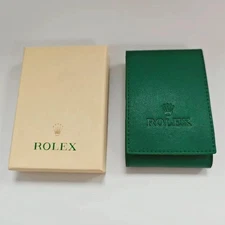
Find Pre-Serviced Vintage Watches on eBay
The hidden cost of vintage watch ownership is only hidden if you do not look for it. Now you know the numbers: $200 to $500 for a basic independent service on a mid-tier vintage automatic, $400 to $1,200 for a Rolex or Omega, $500 to $1,500+ for a vintage chronograph. Factor those costs into every eBay purchase, compare total cost against completed listings for serviced examples, and you will make sharper buying decisions than 90 percent of the people bidding against you.
For the full picture on buying vintage watches smart, start with the complete vintage watch buying guide. Learn which brands offer the best value and lowest service costs. And if you are shopping on a budget, the best vintage watches under $2,500 guide builds service costs directly into its recommendations.
Ready to search? Browse vintage watches on eBay through uBuyFirst to set alerts for the models you are tracking. Look for watchmaker-sellers, demand service documentation, and always do the math before you bid.