Vintage Watch Authentication on eBay: How to Verify Before You Buy
uBuyFirst
A friend of mine bought a "vintage Omega Seamaster" on eBay for $1,200. The listing had detailed photos, a confident description, and the seller had 400+ positive feedback. When he took it to a watchmaker for servicing, the verdict was devastating: original case, aftermarket dial, replacement hands from a different era, and a non-matching movement. It was a Frankenwatch — a timepiece assembled from parts of multiple watches — and worth maybe $300. The seller probably didn't even know. This is why authentication isn't optional when buying vintage watches online. It's the difference between a collection piece and expensive junk.
Why Authentication Matters More in the Vintage Market
Modern watches are relatively straightforward to authenticate. They have warranty cards with dealer stamps, QR codes, anti-counterfeiting holograms, and authorized dealer networks that can verify purchases. Vintage watches have none of that. A watch from the 1960s has passed through multiple owners, potentially multiple watchmakers, and decades of opportunity for parts to be swapped, dials to be refinished, and cases to be modified. The authentication challenge isn't just "real or fake" — it's "how original is this watch, and does the price reflect what's been changed?"
The counterfeiting landscape has evolved dramatically. "Super clones" — high-quality replicas that can fool casual inspection — represent a multi-billion dollar global market, with Rolex being the most frequently replicated brand. These modern fakes use increasingly sophisticated movements that tick at the correct frequency, replicate micro-details like rehaut engravings, and even approximate the weight of genuine cases. On eBay, where you can't hold the watch before buying, photos alone won't always catch a sophisticated fake. That's why layered authentication — combining eBay's programs, your own knowledge, and professional verification — is essential for anything over $500. The scams and safety guide catalogs the most common schemes targeting vintage watch buyers on eBay.
eBay's Authenticity Guarantee: The Full Picture
eBay's Authenticity Guarantee is the foundation of trust for luxury vintage watch buying on eBay, but you need to understand exactly where its coverage starts and stops.
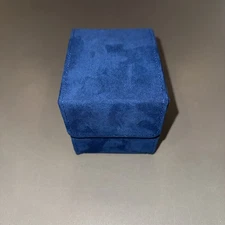
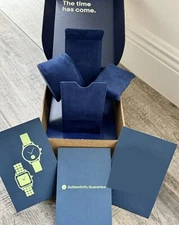
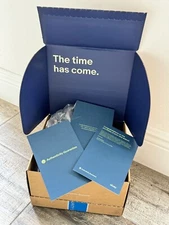
Mandatory tier ($2,000+): Every watch sold for $2,000 or more in the Wristwatches category automatically goes through authentication. The seller ships to eBay's authentication center, not to you. Professional authenticators perform a multi-point inspection covering the movement, crown, bezel, dial, case, clasp or buckle, hands, end links, and serial number. If the watch passes, it receives a unique authentication card and ships to you via 3-day signature-required delivery. If it fails, you get a full refund. For minor discrepancies — say, an undisclosed scratch — you can choose to keep the watch or get a refund. All of this happens at no cost to buyer or seller.
Optional tier ($500–$1,999.99): Watches in this range can add authentication at checkout for $80. The inspection process is identical. I recommend this for any watch over $1,000 — the $80 fee is trivial compared to the risk. If the watch fails authentication, eBay refunds the $80 along with your purchase price. At the $500–$1,000 range, it's a judgment call based on the seller's reputation and the watch's brand. A $600 Seiko Presage from a trusted seller? Probably skip the $80. A $900 Omega Constellation from someone with 50 feedback? Pay the $80.
What authenticators check: The inspection is genuinely thorough for what it covers. Authenticators verify that the movement matches the reference, check serial numbers against known databases, inspect dial printing and lume consistency, examine case finishing and proportions, and verify that the bracelet or strap components are correct for the model. They're looking for counterfeits, significant part swaps, and condition misrepresentation.
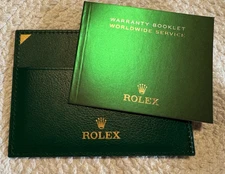
What authenticators do NOT check: This is where collectors get surprised. The inspection does not assess waterproofing — so a "Submariner" might pass authentication but not survive a swim. It does not test timekeeping accuracy — the movement is visually verified but not put on a timegrapher. It does not verify aftermarket documentation, meaning fake box and papers won't trigger a failure if the watch itself is genuine. And it doesn't assess the quality of previous service work — a watch with a genuine movement that was poorly reassembled will still pass as "authentic."
The in-house transition: In May 2025, eBay moved watch authentication in-house to their Moonachie, New Jersey facility. For approximately 4.5 years prior, authentication was handled by third-party partner Stoll & Co. The transition came after persistent complaints from both buyers and sellers. Multiple users on watch forums reported watches being rejected with vague feedback — "unable to authenticate" or "something didn't seem right" — with no specific reasons or inspection details provided. Other users reported seamless, positive experiences. The mixed track record suggests that quality was inconsistent under the third-party model. eBay's decision to bring authentication in-house indicates they want more control over quality, though it's too early to evaluate whether consistency has improved.
The "Final Sale" catch: Once a watch passes Authenticity Guarantee, the transaction becomes "Final Sale." This means buyers cannot file "Significantly Not as Described" (SNAD) claims under eBay's Money Back Guarantee. The rationale: professional authenticators already verified the item matches the listing, so the seller's obligation is complete. You can still return per the seller's stated return policy — if they offer 30-day returns, that still applies. But the eBay SNAD safety net is gone. This is why I always check the seller's return policy before buying any watch that will go through authentication.
ebay authenticity guarantee watches on eBay
See all →

DIY Authentication: What to Check From Listing Photos
Before spending money on professional authentication, you can eliminate a lot of bad watches from your own screen. Here's what I check on every listing, roughly in order of what catches the most fakes and frankenwatches.
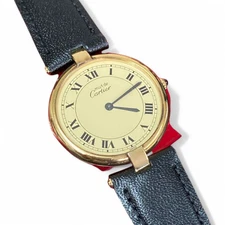
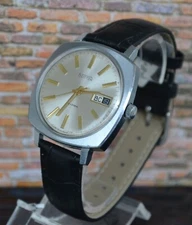
The dial: Start here — it's the most commonly replaced component on vintage watches, and the hardest to replicate perfectly. Under magnification (pinch-zoom on high-resolution listing photos), genuine vintage dials show crisp, even printing. The brand name, model name, and "Swiss Made" text should be sharp with consistent spacing. Fuzzy printing, uneven font sizes, or off-centered logos are immediate red flags. Compare the dial against verified examples from reference sites and brand archives. On Rolex, the coronet at 12 o'clock should be perfectly centered and precisely rendered — fakes often get the proportions slightly wrong. On Omega, check the applied logo's crispness and the spacing of "Seamaster" or "Speedmaster" text.
The lume: Luminous material ages naturally over decades, developing a warm cream, beige, or brown tone called patina. Genuine aged lume has an organic, slightly uneven quality. Artificial patina — applied to make a watch look older — often appears too uniform, too bright, or applied in splotches. On a legitimate vintage watch, the lume on the dial markers and the lume on the hands should age at roughly the same rate to roughly the same color. A watch with bright white lume on the hands but creamy aged lume on the dial has likely had its hands replaced — not necessarily a deal-breaker, but the price should reflect it.
The hands: Hands should match the model's production era. A 1960s Omega Seamaster with modern-style hands is either a parts replacement or a Frankenwatch. Check the hand shape, length, and finish against reference photos of the correct reference number. On Rolex, hand profiles are extremely model- and era-specific — the "Mercedes" hour hand has distinct proportions that changed subtly between decades.
The case: Case proportions are surprisingly reliable tells. Counterfeit cases are often slightly too thick (to accommodate a cheaper, fatter movement), and the finishing — alternating brushed and polished surfaces — is less crisp than genuine. On Rolex, fluted bezels are always gold (white gold or yellow gold), never steel. A fluted bezel that looks like steel is either a very unusual reference or a fake. Check lug width and shape against reference specs — incorrect lugs often indicate a case swap.
The serial and reference numbers: Every major brand has serial number databases or reference charts that correlate serial numbers to production years. If a seller claims a watch is from 1972 but the serial number corresponds to 1985, something is wrong. Ask for clear photos of the serial number (usually on the caseback or between the lugs) and the reference number. Genuine Rolex engravings between the lugs at 6 o'clock and 12 o'clock are deeply cut with clean edges. Shallow, wobbly engravings suggest a fake or a modified case.
Brand-Specific Authentication Tells
Each brand has signature authentication markers. Here are the critical checks for the three brands most commonly found — and faked — in the vintage market on eBay.
Rolex: The cyclops lens over the date window magnifies 2.5x on genuine Rolex watches. Most fakes achieve only 1.5x magnification — the date appears larger but not dramatically so. On modern Rolexes, the movement ticks 8 times per second (creating a sweeping motion), while vintage Rolex movements tick 5–6 times per second. A vintage Rolex ticking once per second has a quartz movement and is either an Oysterquartz (rare, legitimate) or fake. Inside the movement, modern Rolex calibers use a "Microstella" fine-regulation system rather than a traditional regulating arm — the presence of a regulating arm in what's claimed to be a modern Rolex movement is a definitive tell. Authenticating Rolex also means checking caseback engravings: genuine Rolex casebacks are almost always plain (no engravings on the outer caseback), with the exception of certain Sea-Dweller references and commemorative pieces. An ornately engraved caseback on a standard Submariner or Datejust is a major red flag.
Omega: Genuine Omega watches have a 7- or 8-digit serial number engraved on the caseback (or on the movement for some vintage models). Cross-reference this serial number with Omega's production records — databases are available online that correlate serial ranges to approximate production years. The movement should carry the correct caliber number for the reference, stamped in a consistent location. Omega movements display refined finishing: consistent Geneva stripes, clean perlage, polished screw heads, and precise rotor engraving. The Co-Axial escapement found on post-1999 models has a distinctive geometry that counterfeits rarely replicate accurately. For vintage Omega, the quickest check is often the warranty card: if the serial on the card doesn't match the serial on the watch, walk away. Authentic vintage Omega watches also have a specific "horseshoe" or "hippocampus" caseback medallion — on the Seamaster, the sea monster design should be sharply defined, not mushy or flat.
Seiko: Vintage Seiko watches are less commonly counterfeited at the entry level, but modified "Franken-Seikos" are rampant — dials, bezels, and cases from different models assembled into a "custom" piece and sold as original. The serial number on a Seiko encodes the production date: the first digit is the last digit of the year, and the second digit represents the month (1–9 for Jan–Sep, O, N, D for Oct–Dec). A serial number starting with "5N" would indicate May of a year ending in 5. Verify this date against the model's known production run. Japanese domestic market (JDM) Seikos may have kanji day wheels — this is legitimate and often adds value for collectors. The brands and models guide covers which references to target and their current market values.
Professional Authentication Services Beyond eBay
For watches at any price point where you want certainty beyond eBay's Authenticity Guarantee, professional authentication services exist at several levels.
Brand authorized service centers offer the most definitive authentication. Rolex, Omega, and other major brands accept watches for service and will verify authenticity as part of the intake process. The downside: turnaround is 2–4 weeks, cost can be $500+ for a full service, and they won't just authenticate — they want to service it. For Rolex specifically, be aware that Rolex Service Centers (RSC) increasingly replace "aged" components on vintage watches during service, which can reduce collector value. A vintage Rolex with an original gilt dial is worth significantly more than one where RSC replaced the dial during servicing. If you want authentication without service, specify this clearly when submitting.
AWCI-certified independent watchmakers are a strong middle ground. The American Watchmakers-Clockmakers Institute offers two certifications: Certified Watchmaker (CW) and Certified Master Watchmaker (CMW). The CMW exam involves a 600-question written test, the repair of two wristwatches, and the manufacture of two watch parts to precise standards. Finding a CMW or CW near you provides expert authentication without the risk of unwanted part replacements. Expect to pay $200–$500 depending on the watch's complexity and the watchmaker's rates. Authentication typically takes 3–7 business days.
Online authentication services like WatchCSA offer photo-based preliminary assessments. You submit high-resolution photos and the service reviews them against reference databases. These are useful as a screening tool but can't catch everything — a sophisticated Frankenwatch with genuine-looking parts from multiple watches of the same brand may pass photo review. Photo-based authentication costs $50–$100 and typically returns results within 24–48 hours. Treat these as a first pass, not a definitive verdict.
Independent professional appraisers combine authentication with market valuation. Companies like Gray & Sons and Diamond Banc offer comprehensive assessment reports using professional-grade equipment: high-powered magnification, UV light inspection, and timekeeping measurement. These reports carry weight for insurance purposes and resale. Expect $200–$400 for a full authentication and appraisal report. These services are most worthwhile for watches valued above $5,000.
vintage watch authentication service on eBay
See all →

Understanding Condition Grades: eBay vs. Collector Standards
One of the biggest frustration points in buying pre-owned vintage watches on eBay is the gap between how eBay grades condition and how collectors grade it. Understanding this gap prevents the most common disputes.
eBay's official condition grades for watches: The primary condition is "Pre-Owned," with optional sub-grades expanded in January 2025. "Pre-Owned - Excellent" means like new with little to no visible signs of wear. "Pre-Owned - Good" means gently used with light signs of wear. "Pre-Owned - Fair" means significantly visible flaws and heavy wear. The critical problem: these are self-reported by sellers. There's no standardized inspection behind the grade — a seller might list a watch as "Excellent" because it runs, even if the case shows desk-diving scratches and the crystal has a chip.
Collector and dealer grading scales are more granular and more demanding. The typical hierarchy runs: Unworn (never worn, pristine), Like New / Mint (worn but indistinguishable from new), Very Good (minimal wear, light scratches visible on close inspection), Good (light scratches and marks, no major damage, all functions correct), and Fair (noticeable wear, scratches, possible dents, may require servicing). What eBay sellers call "Excellent" typically aligns with collector "Very Good" — a meaningful difference if you're expecting near-mint condition.
For vintage watches specifically, condition assessment has additional dimensions that neither eBay nor the standard grading scale captures well:
Dial condition is graded separately from case condition in collector circles. An "original" dial — one that has never been refinished or repainted — commands a significant premium. Redials (professionally repainted dials) are common on vintage watches and are not inherently bad, but they dramatically reduce collector value. A genuine 1960s Rolex with an original dial can be worth 50–100% more than an identical watch with a service dial. eBay condition grades don't distinguish between original and refinished dials.
Case condition matters differently for vintage versus modern. A vintage watch with unpolished original case edges — retaining the sharp factory finishing — is more valuable to collectors than one that's been polished smooth. Polishing removes metal and rounds edges, changing the watch's visual character and reducing material. Many sellers polish cases before listing to make them look "better," not realizing they're reducing value. eBay's condition grades don't account for polishing history.
Movement service history affects both functionality and value. A movement that's been regularly serviced every 5–7 years is likely in good mechanical condition. A movement that hasn't been serviced in 30 years might run but could have worn parts causing long-term damage. Conversely, a movement serviced by Rolex RSC may have had original parts replaced with modern service parts, reducing collector value. Neither eBay condition grades nor the Authenticity Guarantee inspection assesses service history depth. The servicing costs guide breaks down what different calibers cost to overhaul and when service is worth the investment.
The Frankenwatch Problem: Mixed Parts and Redials
Frankenwatches are the hidden danger of the vintage market, and they're far more common than outright fakes. A Frankenwatch uses genuine parts — but from different watches, different eras, or different references — assembled into a single timepiece. Every individual component might be "authentic" while the watch as a whole is not what it claims to be.
Common Frankenwatch combinations I've seen on eBay: a 1970s Omega case with a 1960s movement and a 1980s replacement dial. A Rolex Submariner case fitted with a GMT-Master bezel insert. A Seiko diver with an aftermarket dial that mimics a rarer variant. The Omega Seamaster my friend bought was exactly this pattern — correct case, wrong everything else. Each part was genuine Omega, but from three different watches across two decades.
Spotting frankenwatches requires reference-level knowledge. You need to know: which movement caliber belongs in which reference case, which dial variants were produced for which reference and in which years, which hand styles match which dials, and whether the serial number on the case matches the serial number on the movement (when applicable). This is why I emphasized studying your target reference extensively before buying.
The price impact is significant. A complete, matching, all-original vintage Omega Speedmaster Professional "Pre-Moon" might sell for $8,000–$12,000 on eBay. The same watch with a replacement dial and non-matching hands might sell for $3,000–$5,000. A Frankenwatch version — correct case but cobbled-together internals — might be worth $1,500–$2,500. That's a potential 70–80% value destruction from mismatched parts. For more on this topic, the main buying guide covers overall price research strategies using completed listings.
eBay's Authenticity Guarantee catches obvious frankenwatches — a Seiko movement in a Rolex case — but may not catch subtle within-brand mismatches, like a Rolex 1500 dial in a 1501 case. This is where independent professional authentication fills the gap.
Build Your Authentication Checklist
Before buying any vintage watch on eBay over $500, run through this verification sequence. It takes about 30 minutes per watch and has saved me from multiple bad purchases.
Step 1 — Reference research: Identify the exact reference number. Look it up on brand-specific databases and watch forums. Know what movement, dial variants, hand styles, and case proportions are correct for that reference and production year. Bookmark a verified example for comparison.
Step 2 — Photo analysis: Compare listing photos against your reference. Check dial printing clarity, lume consistency between hands and indices, hand shape and length, case proportions and finishing, and serial/reference number engravings. If the listing doesn't include photos of the movement, serial number, and caseback, ask the seller. A seller who won't provide these is disqualified.
Step 3 — Seller vetting: Check feedback score (500+ preferred over $2,000), positive percentage (99%+ required), selling history (watch specialist preferred), and return policy (30-day returns strongly preferred). Read recent feedback comments for watch-specific mentions.
Step 4 — Price validation: Run a completed listings search for the same reference in similar condition. If the listing is priced 30%+ below completed listings average, either you've found a deal or something is wrong. Investigate before buying.
Step 5 — Authentication decision: If buying at $2,000+, eBay's AG is automatic. If $500–$1,999, consider the $80 optional authentication. If you want additional confidence, budget $200–$500 for independent authentication after delivery. For ultra-premium purchases ($5,000+), always plan for independent professional authentication regardless of eBay AG.
Start building your vintage watch knowledge by browsing real listings. Explore watches with Authenticity Guarantee on eBay, study completed Rolex listings to learn pricing patterns, or search for sold Omega watches to see what condition descriptions correlate with final prices. The best authentication tool is your own trained eye — and the only way to train it is by looking at hundreds of watches. Check the complete vintage watch buying guide for strategies on search, bidding, and protecting your purchase.