Gold Pricing on eBay: Premiums, Spot Price Math, and When to Buy
uBuyFirst
I spent my first three months buying gold on eBay overpaying by hundreds of dollars per ounce because I never bothered to learn how premiums actually work. The listing price looked reasonable, shipping was free, and the seller had great feedback — so I clicked Buy It Now without calculating what I was really paying above the metal's value. That changed when I started tracking spot prices and running the math on every purchase. The difference between a smart gold buy and a bad one on eBay comes down to understanding a single number: the premium percentage over spot. Once you know how to calculate it — and more importantly, what a fair premium looks like for each type of gold product — you stop leaving money on the table.
This guide breaks down the pricing mechanics behind every gold coin, bar, and round listed on eBay. Whether you are building a bullion position or hunting for deals, the math here will save you real money. For the full picture on buying gold through eBay, start with our comprehensive gold buying guide.
Gold Spot Price: The Number Behind Every Listing
The gold spot price is the current market price for one troy ounce of gold for immediate delivery. It is the baseline against which every physical gold product is priced — coins, bars, rounds, and jewelry. As of early 2026, gold has been trading in the $5,000 to $5,200 per ounce range, a dramatic climb from $2,935 just one year prior, driven by persistent inflation, geopolitical uncertainty, and strong central bank buying.
Two mechanisms set the spot price. The COMEX division of the New York Mercantile Exchange handles over 90% of global gold futures trading. The near-month futures contract price is the primary input for the quoted spot price you see on dealer sites and financial news. The London Bullion Market Association (LBMA) administers twice-daily benchmark auctions — the AM and PM gold fix — used by refiners, miners, and central banks to settle large contracts. In practice, COMEX futures and the LBMA benchmark converge closely, and fewer than 1% of futures contracts result in actual physical delivery. The spot price is a paper-market benchmark, not a retail offer.
This distinction matters because you will never buy physical gold at spot price. The gap between spot and what you actually pay is the premium — and understanding that gap is where eBay buyers either save or waste thousands of dollars.
How eBay Gold Premiums Work (And the Hidden Fee Math)
The premium formula is straightforward: (eBay price - spot price) / spot price x 100 = premium percentage. If spot gold sits at $5,100 and a 1 oz American Gold Eagle sells for $5,460 on eBay, that is a 7.1% premium. Simple enough. But here is what most eBay gold buyers never consider: the seller's fee structure forces eBay prices higher than what online dealers charge, and the breakpoint matters enormously.
eBay charges sellers a final value fee on bullion of 13.6% when the total sale is $7,500 or less per item, dropping to 7% when the sale exceeds $7,500. Run the math on a single 1 oz gold coin at $5,100 spot. At a 5% premium, the listing price would be $5,355 — well under the $7,500 threshold. The seller pays 13.6% of $5,355, which is $728 in eBay fees alone. That means the seller nets only $4,627 on a coin that cost them at least $5,100 at spot. They would lose over $470 on every sale. To merely recover their cost at spot price, a seller would need to list at $5,903 — an effective premium of 15.7% — just to break even before accounting for what they paid above spot when they acquired the gold.
This is why single 1 oz gold coins and smaller items often carry higher premiums on eBay than at online dealers like APMEX, JM Bullion, or SD Bullion. The fee structure punishes sub-$7,500 items. But flip the equation for higher-value items. A 2 oz gold bar at $10,200 spot hits the 7% fee tier. The seller pays $714 in fees, needing only a 7.5% premium to break even — much more competitive with online dealers who typically charge 3-6% on bars plus shipping.
The takeaway: when shopping for 1 oz gold bars or single coins on eBay, expect higher premiums than dealers. When shopping for higher-value items — multi-coin lots, 10 oz bars, or anything crossing the $7,500 line — eBay premiums often become very competitive because the seller's fee burden drops nearly in half.
Premium Breakdown by Product Type
Not all gold carries the same premium. The type of product you buy determines how much above spot you will pay, and the range is enormous — from under 3% for generic rounds to over 30% for fractional bars. I have tracked these ranges across eBay sold listings and dealer pricing throughout 2025 and into 2026 to build a realistic hierarchy.
Generic gold rounds from private mints consistently carry the lowest premiums at 2-4% over spot. These are simple .9999 fine gold discs without government backing or legal tender status. The tradeoff is lower resale liquidity — a pawn shop or local coin dealer may offer less for a generic round than for a sovereign coin. But for pure metal accumulation, rounds give you the most gold per dollar.
One-ounce gold bars from recognized refiners like PAMP Suisse and Valcambi typically run 3-6% over spot. Bars carry slightly higher premiums than rounds because of the brand recognition and assay card packaging, but remain among the best value options. At current prices, a 3% premium on a 1 oz bar is roughly $153 above spot — real money, but far better than what you will pay for most coins.
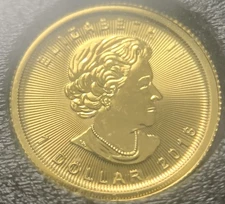
Among government-minted bullion coins, the Canadian Gold Maple Leaf and Austrian Gold Philharmonic often offer the lowest premiums at 3-5% over spot — both are .9999 fine with strong anti-counterfeiting features. The South African Krugerrand, the oldest modern bullion coin with massive global recognition, runs 3.5-5.5%. The American Gold Buffalo, the only .9999 fine US-minted coin, typically sits at 4.5-7%. And the American Gold Eagle — the most popular bullion coin in the United States — commands 5-8% premiums, pushed higher by strong domestic demand and periodic US Mint production constraints.
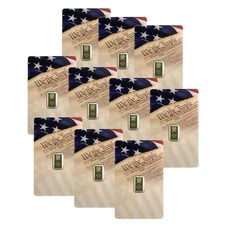
Fractional gold is where premiums spike hard. A 1/10 oz Gold Eagle carries premiums of 8-15% or more, and 1 gram gold bars regularly hit 15-40% over spot. At $5,100 spot, one troy ounce contains about 31.1 grams. A single gram of gold is worth roughly $164 at spot, yet 1g bars on eBay routinely sell for $185-$230 — premiums of 13-40%. This is the novelty and gift market at work. If you are buying gold as an investment, avoid fractional sizes below 1/4 oz unless you specifically need them for divisibility.
Pre-1933 US gold coins sit in their own category. A $20 Saint-Gaudens Double Eagle contains 0.9675 oz of gold, but common-date examples trade at 10-15% over melt value, and better dates with collector demand can command 30% or more. These carry both a bullion floor and a numismatic premium. For details on how different coin types and their premiums compare, see our dedicated coin guide.
Using eBay Sold Listings for Price Research
eBay's completed and sold listings filter is the single best tool for researching actual gold transaction prices — better than any dealer comparison site because it shows what real buyers actually paid, not what sellers are asking. I use this before every gold purchase to establish whether a listing is priced fairly.
Here is the process. Go to eBay's Advanced Search. Enter your search term — for example, "1 oz gold maple leaf." Check the "Sold listings" box under Search Including. Sort by "Ended: Most Recent" to see the freshest data. Green prices indicate completed sales; red prices indicate listings that ended without selling. The red prices are just as valuable because they tell you the market's ceiling — the price at which buyers walked away.
To calculate the average premium from sold listings, pull the last 10-15 sold prices for the exact product you want. Subtract the spot price on the date each item sold (you can look up historical spot prices on Kitco or GoldPrice.org). Divide by that day's spot price and multiply by 100. Average those percentages. This gives you a trailing premium range that accounts for daily spot fluctuations. When I did this for 1 oz Gold Maple Leafs in early 2026, the average sold premium was 4.8% — right in line with dealer pricing, but individual listings ranged from 3.2% to 9.1%.
Watch for patterns in the data. Auction-format sales tend to close at lower premiums than Buy It Now listings because competitive bidding creates efficient pricing. Items with free shipping often appear cheaper but have higher base prices to compensate — always calculate total cost. And listings from high-volume sellers with 10,000+ feedback often sell at lower premiums because those sellers operate on volume margins, similar to online dealers. For more on evaluating gold dealers and their pricing, see our dealers and authentication guide.
When Gold Premiums Spike — and When They Drop
Gold premiums are not static. They expand and contract based on demand pressure, supply constraints, and market psychology. Recognizing these cycles lets you time your purchases for the lowest cost basis.
Premiums spike during periods of fear and uncertainty. Banking crises, geopolitical escalation, inflation surprises, and stock market crashes all drive retail gold demand higher while dealer and mint supply remains fixed. During the banking stress of early 2023, for example, gold premiums on popular coins expanded 2-4 percentage points above their normal range within days. The same pattern repeats every time markets panic — retail buyers rush into physical gold, supply tightens, and sellers raise prices because they can.
Seasonal patterns are real but nuanced. Indian wedding season and Diwali (October through November) and Chinese Lunar New Year (January through February) drive massive global gold demand, which filters into US premium levels. US tax refund season from February through April brings a wave of retail buyers onto eBay and dealer sites, nudging premiums up. Post-Christmas through mid-January is often a softer period — sellers who received gold as gifts list it for sale, and retail demand dips after the holiday spending peak. This January-through-early-February window has historically been one of the better times to buy physical gold on eBay at lower premiums.
There is also a premium compression effect when spot prices are rising rapidly. As APMEX noted in their 2026 market outlook, rising precious metals prices produce "a massive decrease in premiums" because the higher the base metal price, the less significant fixed production and distribution costs become as a percentage. When gold jumps from $3,000 to $5,000, a $150 production and margin cost drops from 5% to 3% of the final price without anyone changing their markup in dollar terms. This means that in a rapidly rising gold market, premiums as a percentage naturally compress — making it paradoxically one of the better times to buy in premium-percentage terms even though the sticker price is higher.
ebay gold sold listings on eBay
See all →
Best Offer Strategies and Auction Sniping for Gold
Many gold bullion listings on eBay accept Best Offer, and knowing how to use this feature strategically can shave 3-5% off your purchase price. eBay's system allows sellers to set an auto-accept price (their minimum acceptable) and an auto-decline threshold. Your goal is to land between those two numbers.
My approach: I check the current spot price, calculate my target premium, and submit an offer reflecting that number. If spot is $5,100 and I want to pay no more than 5% premium for a 1 oz gold coin, my offer ceiling is $5,355. I start my Best Offer 3-5% below the seller's asking price. If the listing is at $5,600, I offer $5,320 — a specific, non-round number that signals I have done my homework. Round-number offers like $5,000 or $5,300 look like low-ball guesses. The seller has 24 hours to accept, decline, or counter. If they counter, you have another 24 hours to respond. Each offer cycle is valid for 96 hours total.
Time your offers strategically. Submit Best Offers when gold spot drops intraday — sellers who listed their item when spot was higher may be more receptive to an offer that reflects the new lower price. Monday mornings and late Friday afternoons tend to be lower-activity periods when sellers are more motivated to close deals. And if a listing has been sitting for more than two weeks without selling, the seller is more likely to accept a lower offer.
For gold auctions, sniping — placing your maximum bid in the final 5-10 seconds — is the mathematically optimal strategy. By waiting until the last moment, you prevent other bidders from reacting and avoid the emotional bidding wars that drive auction prices above Buy It Now levels. Decide your maximum bid before the auction ends, based on your target premium percentage. If the gold sovereign you want contains 0.2354 oz of gold, calculate 0.2354 times spot, add your acceptable premium percentage, and that is your maximum bid. Place it with 5-7 seconds remaining. Services like Gixen can automate this process if you cannot be present at the auction close.
Gold auctions on eBay can close below equivalent Buy It Now prices, particularly for less-popular products like gold lots, mixed bullion sets, or international coins with smaller US followings. I have seen Krugerrands close at 2-3% premiums in auctions that would be listed at 5-6% as Buy It Now.
Calculating Your True Cost: eBay vs. Online Dealers
The listing price on eBay is not your true cost. To compare eBay prices accurately against online dealers, you need a full cost calculation: listing price + shipping + insurance + applicable sales tax = true cost. Then convert that true cost into a premium percentage over spot to make an apples-to-apples comparison.
Shipping and insurance matter more than most buyers realize. Many eBay gold sellers offer free shipping, but factor that cost into their listing price. A listing at $5,400 with free shipping and a listing at $5,350 with $15 shipping are nearly identical in true cost — but the second one may look like a better deal until you add shipping. Insurance is trickier. Some sellers include USPS insurance or ship via UPS/FedEx with declared value coverage. Others ship uninsured. For items worth $5,000+, I insist on a shipping method with full value insurance, even if it costs $20-30 extra. The alternative — eating a total loss if the package disappears — is not worth the savings.
Sales tax varies by state and can add 4-10% to your total cost. Some states exempt bullion purchases from sales tax (many exempt purchases above a certain dollar threshold), while others tax gold like any other product. This is a significant variable. A 1 oz gold coin at $5,400 in a state with 8% sales tax becomes $5,832 — an effective premium of 14.3% over spot even if the listing premium was only 5.9%.
Online dealers like APMEX, JM Bullion, and SD Bullion typically offer lower premiums on standard bullion products — often 3-5% for popular 1 oz coins — but charge $7-15 for shipping on smaller orders (free shipping usually starts at $199-$499). Most dealers charge sales tax in states where required, same as eBay. Some dealers offer discounts for payment by check or bank wire (saving them credit card processing fees), which can further reduce your cost by 1-3%.
eBay wins in specific scenarios: when you find auction deals below dealer pricing, when eBay Bucks or credit card rewards offset the premium difference, when the item is over $7,500 and seller fees are lower, or when you are buying less-common products that dealers do not carry at competitive prices. Dealers win for standard bullion in quantity, for guaranteed authenticity on bars, and for bulk purchases where volume discounts apply. For more on evaluating gold bar premiums at different weight points, see our bar buying guide.
Run the numbers every time. A quick premium calculation before hitting Buy It Now has saved me hundreds of dollars — and it takes thirty seconds with a phone calculator and a spot price check.
cheapest gold on ebay on eBay
See all →




Start Running the Numbers on Your Next Gold Purchase
Every gold purchase on eBay is a math problem. The spot price gives you the baseline. The premium percentage tells you what you are really paying for the product, the seller's margin, and eBay's fees. And the true cost calculation — with shipping, insurance, and tax — tells you whether eBay or an online dealer gives you more metal for your money on that specific purchase.
Start by checking current gold round and gold bar prices on eBay, then pull up eBay's sold listings to see what recent buyers actually paid. Calculate the premium percentage. Compare it against dealer pricing. Factor in your state's sales tax situation. Then decide. For buyers building a scrap gold position or hunting for underpriced jewelry, our guide to gold jewelry melt value on eBay walks through that specific math. And for verifying that what you are buying is genuine before you spend thousands, do not skip our counterfeit detection guide.
The gold market rewards buyers who do the math. eBay rewards buyers who understand the platform's fee mechanics and timing windows. Put those two edges together and you will consistently buy gold at lower premiums than the average buyer scrolling through listings and guessing.