Custom Keycaps on eBay: The TKL Upgrade Guide
uBuyFirst
I spent $45 on my first TKL keyboard and another $55 on a set of PBT keycaps to go with it. Within a week, the keycaps had completely transformed the board — deeper sound, better texture, no more greasy shine after a long coding session. That $55 upgrade made a bigger difference than any other mod I've tried, and I didn't need to solder anything or void a warranty. If you own a TKL mechanical keyboard and you're still typing on whatever ABS caps came in the box, keycaps are the single fastest way to change how your keyboard sounds, feels, and looks. But eBay's keycap market is a maze of clones, mystery materials, and listings that don't tell you what you're actually getting. Here's everything I've learned about buying keycaps on eBay without wasting money.
ABS vs PBT: The Material That Shapes Everything
Every keycap buying decision starts with material. The two plastics that matter are ABS (Acrylonitrile Butadiene Styrene) and PBT (Polybutylene Terephthalate), and they feel genuinely different under your fingers.
ABS is what ships on most stock keyboards. It's smooth, lightweight, and cheap to manufacture — which is why companies love it. The problem with ABS shows up after a few months of use: your most-used keys develop a glossy, greasy-looking shine as the surface wears down from finger oils. The WASD cluster and spacebar go first. ABS keycaps are typically thinner too, around 1.0–1.2mm thick, and they produce a higher-pitched, hollow sound when you bottom out. They're also more susceptible to UV yellowing — if your keyboard sits near a window, those white ABS caps will start turning beige within a year.
PBT is the enthusiast standard. It's a harder, denser plastic with a naturally textured, matte surface that resists shine. I've used PBT sets daily for over a year without any visible wear on the legends or surface texture. PBT keycaps run about 1.5mm thick, which contributes to their signature deeper, "thockier" sound profile. The tradeoff: PBT is harder to manufacture (the plastic tends to warp during cooling), so there are fewer color options and the production costs run higher. A solid PBT keycap set on eBay typically runs $25–$60, depending on the profile and legend printing method.
Here's the trap I see constantly on eBay: cheap listings advertising "PBT keycaps" at suspiciously low prices ($8–$15 for a full set). As Keychron's own engineering team has warned, some budget "PBT" keycaps contain minimal actual PBT content — they mix in cheaper plastics to cut costs, and the result can be worse than decent ABS. If you're browsing eBay and a PBT set costs less than $20 shipped from China, the PBT content is probably low enough that you're not getting the durability or texture benefits you're paying for. Stick to sets in the $25+ range from sellers with established feedback, or buy from known brands like Akko, KBDFans, or Womier that list on eBay.
One more material worth mentioning: POM (Polyoxymethylene). It's a niche option with an ultra-smooth, almost slippery surface and excellent durability. POM keycaps are rare on eBay and typically more expensive, but if you prefer a glassy-smooth feel without the ABS shine problem, they're worth searching for.
Keycap Profiles: How Shape Changes Feel and Sound
Material determines durability and texture. Profile determines how the keycap meets your fingers — its height, angle, and sculpting across rows. The profile you choose will change your typing experience more dramatically than almost any other factor, and eBay is flooded with options across every major profile type.
Cherry profile (9.4mm height) is the enthusiast gold standard, and for good reason. Named after the Cherry Corporation that designed the original MX switches, Cherry profile keycaps sit lower than OEM and have a gentle sculpt across rows that guides your fingers naturally. Every GMK set uses Cherry profile. It's the most popular choice for custom builds, and you'll find the widest selection of Cherry profile sets on eBay, from $30 PBT clones to $300+ authentic GMK. One critical compatibility note: Cherry profile keycaps can cause interference on keyboards with north-facing switches — the bottom edge of the keycap housing hits the switch's LED housing, creating a rattly, uneven feel. Before you buy, check whether your TKL has north-facing or south-facing switches. South-facing is compatible with everything; north-facing needs Cherry profile sets with extra clearance.
OEM profile (11.9mm height) is what most prebuilt keyboards ship with. It's taller than Cherry, slightly less sculpted, and perfectly functional. If your current keyboard feels "normal" to you, it probably has OEM caps. There's nothing wrong with OEM profile — it's just that once you try Cherry or SA, OEM starts feeling like the default option it is. OEM sets are also the cheapest on eBay, often under $20 for a basic PBT set.
SA profile (16.5mm height) is the dramatic one. These tall, spherically-topped keycaps look like vintage typewriter keys and produce the deepest, loudest "thock" of any profile — the hollow cavity inside acts like an echo chamber. SA sets look stunning in photos, which is partly why they're so popular on r/MechanicalKeyboards. The downside is real though: that height can fatigue your wrists during extended typing sessions, and you'll almost certainly need a wrist rest. Browse SA profile keycaps on eBay if you want the most distinctive-looking and sounding keyboard in the room.
DSA profile (7.6mm height) is uniform — every row is the same height and shape. This means any keycap can go in any row position, which is ideal if you use alternative layouts like Dvorak or Colemak. DSA sits very low and flat, almost like laptop keys with mechanical travel. It's popular for gaming because the low profile enables faster lateral finger movement. You'll find plenty of DSA keycap sets on eBay in the $20–$40 range.
XDA profile (9.1mm) is similar to DSA but with a wider, flatter top surface that gives your fingertips more room. It's become a favorite for themed sets with custom artwork because the larger top surface accommodates more detailed legends. XDA sets on eBay typically run $18–$45.
MT3 profile (~16mm) is Matt3o's design for Drop — tall like SA but with deeply scooped, spherical tops that cradle each finger. MT3 fans describe it as the most comfortable typing profile for extended writing sessions. Finding MT3 on eBay usually means buying aftermarket Drop sets, which run $70–$120.
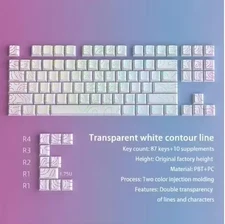
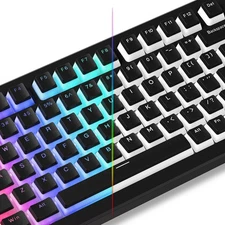
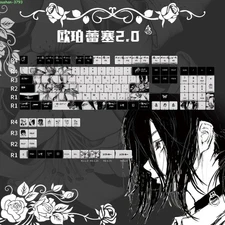
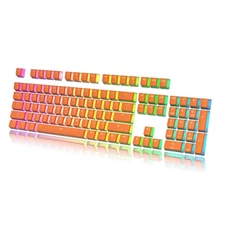
pbt keycaps mechanical keyboard on eBay
See all →

GMK Keycaps on eBay: Authentic Sets, Clones, and the Gray Area Between
GMK Electronic Design is a German manufacturer that acquired the original Cherry Corporation keycap moulding equipment. Their doubleshot ABS keycaps in Cherry profile are considered the premium standard in the mechanical keyboard hobby — and the pricing reflects it. During official group buys (typically run through Drop, Novelkeys, or Cannonkeys), a GMK base kit costs $130–$170 and takes 6–18 months to ship. On the aftermarket, popular or discontinued sets command $200–$500+, with truly rare colorways like GMK Olivia or GMK Botanical sometimes exceeding $400 sealed.
eBay is one of the largest aftermarket venues for authentic GMK sets. Searching for GMK keycaps on eBay right now returns a mix of sealed authentic sets, lightly used sets, and — this is the critical part — an enormous volume of clones that look almost identical in listing photos. The clone market has exploded because the same Cherry profile and similar colorways can be produced in PBT dye-sublimation for $30–$60, compared to $150+ for the real thing.
Here's how to tell authentic GMK from clones on eBay:
Check the material. This is the single most reliable test. Authentic GMK keycaps are exclusively doubleshot ABS — they have never made a PBT set. If a listing says "GMK" anywhere in the title and lists PBT as the material, it's a clone. Period. Legitimate GMK listings will specify "doubleshot ABS" and usually mention German manufacturing. I see dozens of eBay listings daily for "GMK Botanical PBT Dye-Sub Cherry Profile" at $35 — those are clones using GMK's colorway name on a completely different product.
Examine the packaging. Authentic GMK sets ship in custom-designed boxes with themed artwork matching the colorway. Inside, keycaps sit in molded egg-tray-style holders. Clones arrive in generic cardboard boxes with plastic bag packaging. If an eBay listing shows the keycaps in a plain box or no original packaging at all, proceed with extreme caution — though legitimate second-hand sellers sometimes sell without the box.
Check the price. An authentic, sealed GMK base kit for under $100 on eBay is virtually impossible in the current market. If the deal seems too good, it isn't real. The in-stock GMK sets available through Drop (like GMK Red Samurai or GMK White-on-Black) retail for $110–$140, and resellers on eBay generally price at or above retail. A brand-new "GMK" set for $35–$60 is a clone — it might be a perfectly fine PBT set worth the money, but it's not genuine GMK.
Read the legends. Authentic GMK uses doubleshot molding for legends, meaning the text is a separate layer of plastic injected into the keycap — it literally cannot fade or wear off. The fonts are precise, consistent, and perfectly centered. Clones use dye-sublimation printing on PBT, which can be good but often shows subtle inconsistencies: slightly off-center text, minor color variations between keys, or fonts that don't quite match the original.
Now, here's the nuance: GMK clone keycaps aren't inherently bad products. A $40 PBT dye-sub set in Cherry profile from a decent manufacturer like KBDiy or Akko can be an excellent keycap set that looks great and lasts well. The problem is when sellers deliberately misrepresent clones as authentic GMK to justify inflated prices. If a listing is honest about being a "GMK-inspired" or "GMK clone" set at $30–$50, that can be a solid value buy for your TKL build.
Artisan Keycaps: Functional Art for Your Escape Key
Artisan keycaps are handcrafted, one-of-a-kind (or small-batch) keycaps made from materials like resin, metal, wood, or clay. They're not about covering your whole keyboard — most people use a single artisan on the Escape key, a function key, or occasionally a spacebar. They're miniature sculptures that turn your keyboard into a conversation piece.
The artisan market on eBay ranges from $9 mass-produced resin caps to $200+ hand-painted limited-edition pieces from established makers. Prices for artisan keycaps on eBay depend heavily on the maker, material complexity, and scarcity. Here are the tiers I've seen:
Budget artisans ($9–$30): Mass-produced resin caps, often from Chinese manufacturers. These include translucent resin designs, simple animal shapes, and pop culture characters. Quality varies wildly — some are genuinely attractive with clean mold lines and good stem fit; others arrive with visible air bubbles, rough edges, or stems so loose they wobble on your switch. At this price point, check seller photos carefully for close-ups of the stem and surface detail. Return policies matter here.
Mid-range artisans ($30–$80): Small-studio productions from makers like Jelly Key, Dwarf Factory, and HiRosArt. These typically feature multi-layered resin pours, encapsulated elements (flowers, landscapes, ocean scenes), and consistent MX-compatible stems. Jelly Key's group buys offer tiered pricing with free shipping on orders of six or more. On eBay, aftermarket pricing for popular Jelly Key or Dwarf Factory caps can run 20–40% above retail due to limited availability.
Premium artisans ($80–$200+): Limited-edition or one-off pieces from makers with established reputations — names like Clack Factory, KeyForge, and BroCaps. These are the collectibles of the keycap world, sold through raffles and drops that sell out in seconds. Aftermarket prices on eBay and MechMarket can be significant. Before buying at this tier, verify the maker's authenticity by cross-referencing the design against their official social media or catalog. Counterfeits exist even in the artisan space.
One advantage eBay offers over Reddit's MechMarket for artisan purchases: buyer protection. eBay's Money Back Guarantee covers you if an artisan arrives damaged, misrepresented, or doesn't match the listing description. On MechMarket, you're relying on PayPal Goods & Services and community reputation — there's no platform-level dispute resolution.
TKL Compatibility: The Sizes and Stems That Matter
The great news about TKL keyboards and keycap compatibility: the standard TKL layout (87–88 keys) is one of the most keycap-friendly form factors you can own. Because TKL uses a standard ANSI layout without the numpad, virtually every aftermarket keycap set is designed to cover it completely. You won't have the compatibility headaches that plague 65% and 75% keyboard owners dealing with non-standard bottom rows. For a deeper overview of TKL form factors and what makes them the most versatile layout for modding, check our TKL mechanical keyboards buying guide.
Stem type is the first compatibility check. Nearly all aftermarket keycaps use MX-style cross stems — the same cross-shaped mount used by Cherry MX, Gateron, Kailh, and Outemu switches. Industry estimates put MX-compatible switches at over 80% of all mechanical keyboards sold. If your TKL uses any of these switch brands, every standard keycap set on eBay will physically fit. The exceptions: keyboards with Topre (capacitive), Alps (rectangular), Kailh Choc (low-profile), or proprietary stems like older Logitech Romer-G. None of these are compatible with standard aftermarket keycaps without adapters.
Key sizes on a standard TKL ANSI layout: The bottom row uses 1.25u modifiers (Ctrl, Alt, Win, Menu) with a 6.25u spacebar — this is the standard configuration, and any keycap set labeled "ANSI" or "standard layout" will cover it. Your TKL also needs a 2.25u left Shift, 2.75u right Shift, 2u Backspace, and 2.25u Enter. These are all standard sizes included in every full keycap set. If you're buying a set that advertises "87-key" or "TKL" coverage, it should include everything.
Stabilizers: Your TKL has five stabilized keys — Spacebar (6.25u), Left Shift (2.25u), Enter (2.25u), Backspace (2u), and Right Shift (2.75u). Keycaps don't affect stabilizer compatibility directly, but thicker keycaps (particularly PBT at 1.5mm) can change how stabilizers sound and feel. If you're modding your TKL with new keycaps and notice rattly stabilizers for the first time, the keycaps aren't the problem — they're just revealing an issue that was masked by thinner stock caps. Consider lubing your stabilizers while you have the keycaps off.
North-facing switch interference: This is the compatibility issue that catches the most people. If your TKL has north-facing switches (LED on top of the switch housing), Cherry profile keycaps — including all GMK sets — will physically collide with the switch housing on Row 3 (the QWERTY row). The keycap won't seat fully, producing an uneven feel and a hollow, rattly sound. The fix: use a profile that doesn't interfere (OEM, SA, DSA, XDA all work fine with north-facing), or add thin switch spacers between the keycap and switch. If you're shopping for a TKL keyboard specifically for keycap modding, look for boards with south-facing switches — they're compatible with every keycap profile. Many keyboard brands in our TKL brand guide now specify switch orientation in their specs.
How to Evaluate Keycap Listings on eBay
Keycap listings on eBay range from meticulous enthusiast sellers with close-up photos of every key to one-line descriptions with stock renders. Here's the evaluation framework I use before buying anything.
Use completed listings for price research. Before paying any asking price, search eBay for the exact keycap set name with the "Sold items" filter enabled. This shows you what people actually paid in the last 90 days, not what sellers are hoping to get. I've seen sellers list common GMK clone sets at $80+ when the same set consistently sells for $35. Completed listings also reveal demand patterns — if a particular set has dozens of sold listings at consistent prices, you know the market is active and competitive.
Read material claims skeptically. eBay keycap listings frequently use ambiguous language. "GMK style," "GMK inspired," and "GMK copy" all mean clone — not authentic. "Premium PBT" and "high-quality PBT" are marketing phrases, not material specifications. What you want to see: specific thickness measurements (1.5mm PBT is the standard for quality sets), the exact printing method (dye-sublimation or doubleshot), and the profile name (Cherry, OEM, SA, etc.). Listings that lack these details are usually selling generic budget caps.
Evaluate the seller. For keycap purchases, seller specialization matters. A seller with hundreds of feedback in keyboards and computer accessories is more likely to accurately describe their products than someone who primarily sells phone cases but has a few keycap listings. Check their recent feedback specifically for keycap-related transactions. Watch out for sellers with very high sales volumes of "GMK" sets shipping from Shenzhen or Hong Kong at clone prices — they're selling clones, which is fine if they're priced and described honestly, but some inflate descriptions to charge premium prices.
Photo quality tells you a lot. Authentic GMK sellers typically photograph the actual box and trays. Sellers with real product will show you the keycap legends up close, the underside with doubleshot construction visible, and sometimes the box seal. Clone sellers almost universally use 3D renders or stock photos that show idealized versions of the colorway. If every listing photo looks like a professional product render rather than an actual photograph, you're probably looking at a clone or a dropshipper who has never touched the product.
Use Best Offer strategically. Many eBay keycap sellers — especially those with aftermarket GMK sets — accept Best Offer. For authentic GMK sets that have been listed for more than a week without selling, a 10–15% below asking offer is reasonable and frequently accepted. For clone sets, there's less negotiation room because margins are already thin. For doubleshot keycap sets, comparing multiple sellers' prices first gives you leverage to know exactly where the market sits.
Factor in shipping from Asia. Many eBay keycap sellers ship from China, which means 2–4 week delivery times and potentially no free returns. Some sets ship via eBay's Global Shipping Program, which adds import fees at checkout. For purchases over $50, I prefer US-based sellers with established return policies — the slight premium is worth the faster shipping, easier returns, and reduced risk. If you're buying from an international seller, make sure they have at least 98% positive feedback with hundreds of transactions.
Condition matters for used sets. Used keycap sets are a legitimate way to save money, but understand what you're getting. ABS keycaps develop shine that cannot be reversed — if a used GMK set has visible shine on WASD and the spacebar, it's a cosmetic issue you're stuck with. PBT keycaps hold up much better used because they resist shine. For used sets, look for listings that describe "light use" or "mounted once," and ask the seller directly about shine on high-use keys if the photos don't clearly show it. You can sometimes find barely-used sets from people who bought a colorway that didn't match their setup, and these are genuine bargains.
What to Buy First: Keycaps by Budget
If you're just getting started with TKL keycap customization, here's how I'd approach it at each price point:
Under $25: Look for PBT dye-sub sets in OEM or XDA profile. At this price, you'll find solid options from brands like YMDK on eBay — basic colorways (white on black, gray tones, single-color sets) in decent PBT. Don't expect the deepest thock or the crispest legends, but these are a massive upgrade from stock ABS and they'll last years without visible wear.
$25–$50: This is the sweet spot for most TKL users. Cherry profile PBT dye-sub sets from brands like KBDiy, Womier, and various eBay-native sellers live here, including most GMK colorway clones. You'll get proper 1.5mm PBT, clean dye-sub legends, and full TKL coverage including novelty keys. Search for custom keycaps in this range and sort by seller rating.
$50–$100: Premium PBT sets from recognized brands (Akko, Keychron, Drop's in-house PBT lines), plus some doubleshot ABS sets. At this tier, you're getting better color accuracy, thicker walls, and more consistent QC. You might also find lightly used authentic GMK sets if you're patient — sellers sometimes list used GMK at the high end of this range when they're upgrading to a different colorway.
$100+: Authentic GMK territory, plus premium artisan keycaps and limited-edition sets. If you're spending this much, buy from sellers with returns accepted and verify authenticity using the checklist above. At this price point, consider setting up a saved search alert on uBuyFirst to catch new listings the moment they appear — popular GMK sets sell fast. For second-hand deals on keycaps bundled with keyboards, check our guide on buying used TKL keyboards on eBay.
Keycaps are the most visible, most tactile, and most personal part of your keyboard setup. Whether you go with a $30 PBT clone set or a $300 sealed GMK kit, the right keycaps turn your TKL from a tool into something you actually enjoy using every day. Start browsing, start comparing, and set up alerts for the colorways you want — the best eBay deals on keycaps don't last long.